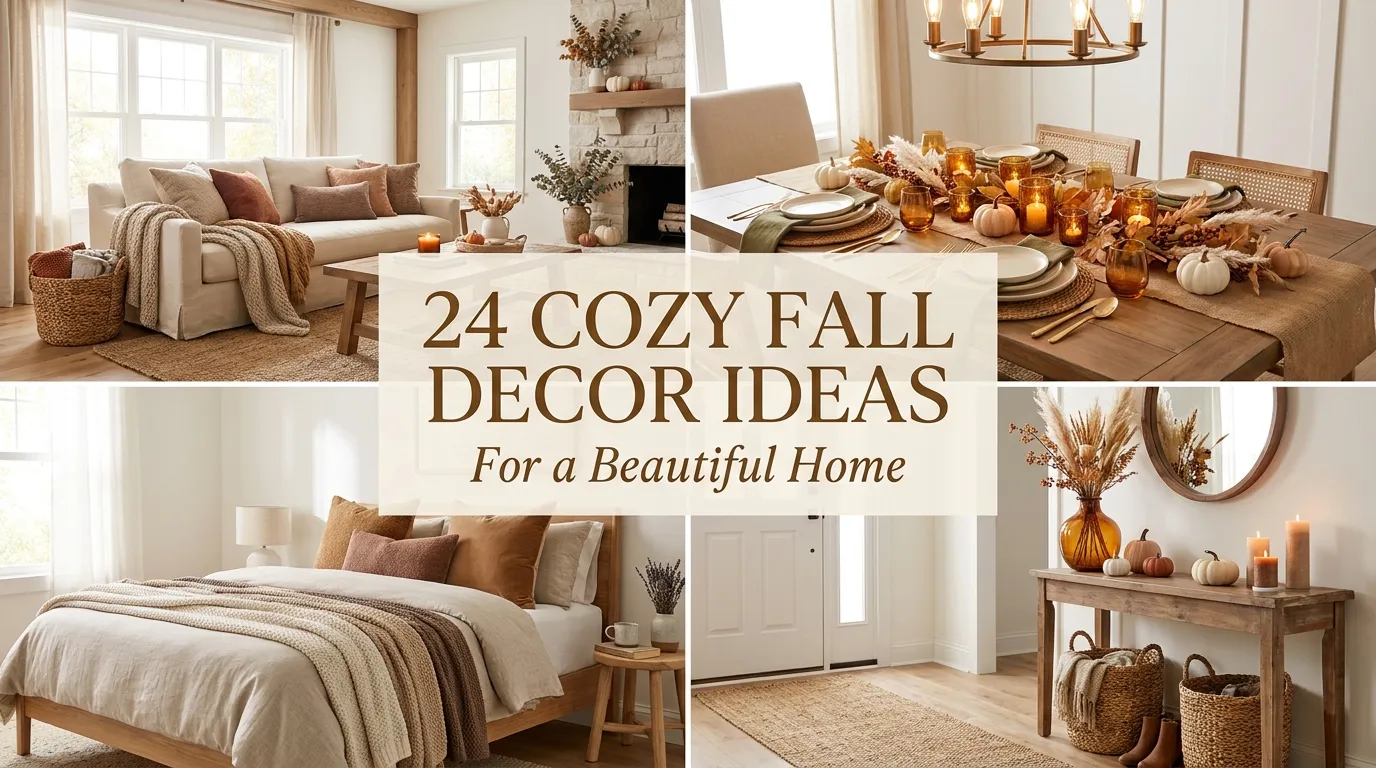
24 Cozy Fall Decor Ideas for a Beautiful Home
Ready to make your home feel warmer, softer, and beautifully autumn-ready? These Fall Decor Ideas can turn ordinary rooms into cozy spaces you’ll want to linger in.

From layered textures and warm lighting to natural wood, seasonal accents, and inviting corners, this collection focuses on simple changes that create a noticeable difference. You don’t need a complete makeover or a large decorating budget to make your space feel special. In my experience, a few thoughtful updates can completely change how a room looks and feels. Whether you’re refreshing a living room, bedroom, dining area, or entryway, these ideas offer practical inspiration you can easily adapt to your own home and personal style.
1. Warm Entryway Layers
- A layered entryway instantly introduces autumn style without requiring a major makeover.
- Wood, woven textures, and dried stems add warmth while keeping the space practical.
- A narrow console helps create a styled look without blocking an important walkway.
- Repeat one seasonal color elsewhere in your home for a more connected design.
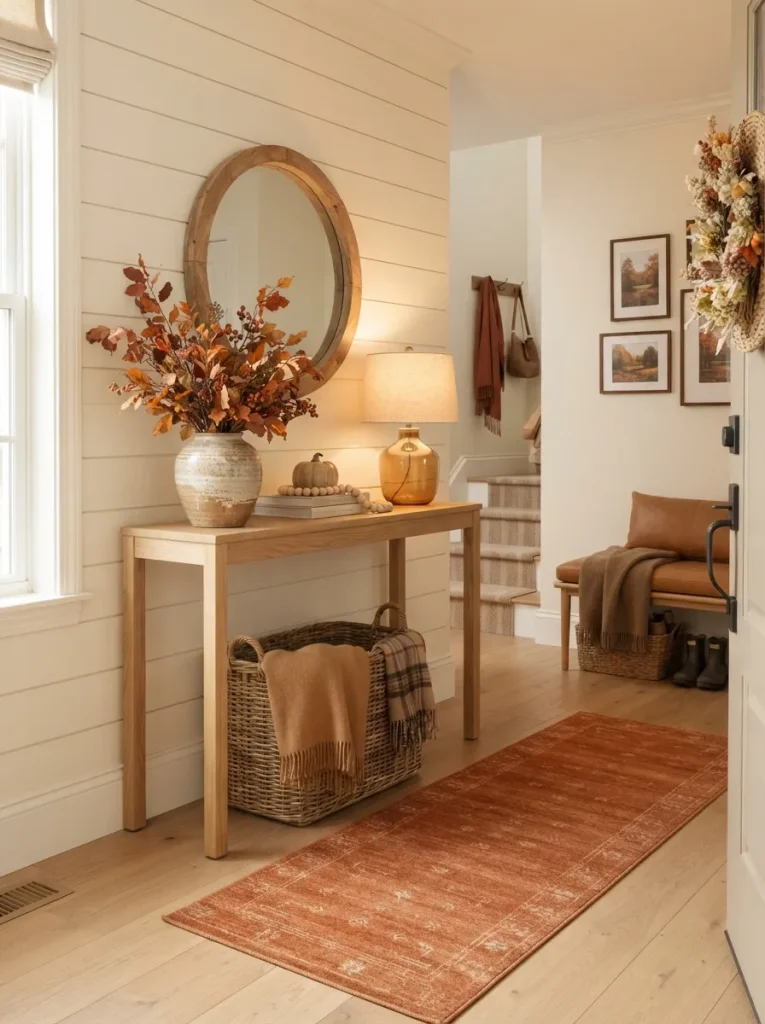
Nothing makes a room feel ready for autumn faster than a warm, layered entryway. Start with a narrow wood console, then add a woven basket, a ceramic vase filled with dried stems, and a small stack of neutral books. A rust-colored runner or plaid mat brings seasonal color without overwhelming the space. Keep the palette grounded in cream, camel, brown, and muted orange so the arrangement feels timeless. In my experience, an entryway looks more polished when every decorative piece has breathing room. Add one soft lamp or nearby wall light for a welcoming glow during darker fall evenings.
A thoughtful entryway sets the tone before anyone reaches the living room, making it an easy place to introduce seasonal styling. Choose textures that can handle everyday traffic, such as jute, cotton, wood, and woven storage. A few carefully placed autumn accents create visual interest while keeping keys, shoes, and bags organized. For a stronger Pinterest-worthy look, repeat one color from the entryway somewhere else in the home, such as rust pillows or caramel throws. This small connection makes separate spaces feel intentional, coordinated, and comfortably layered rather than decorated all at once.
2. Cozy Mantel Styling
- A balanced mantel creates an instant focal point in the living room.
- Ceramic pumpkins and dried branches add seasonal character without looking overly themed.
- Mixing different heights gives the display depth and keeps the arrangement visually interesting.
- Leave small spaces between pieces so the mantel feels collected rather than crowded.
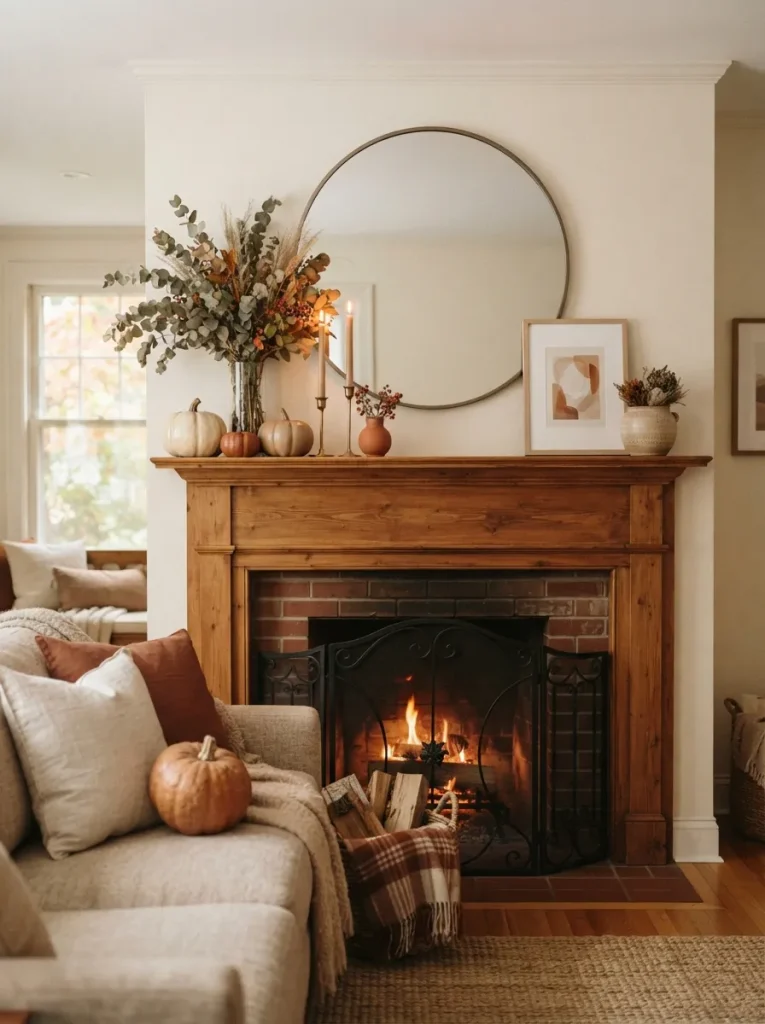
Bring autumn indoors with a mantel that feels warm, balanced, and easy to refresh. Layer a simple mirror or framed artwork behind the display, then arrange ceramic pumpkins, tapered candles, dried branches, and a few textured pieces across the shelf. Mix heights carefully so the arrangement feels collected rather than crowded. Cream, terracotta, warm wood, and soft brown create a cozy palette that works beautifully against white, beige, or stone walls. I’ve noticed that using fewer larger accents often looks more sophisticated than filling every inch. Leave small gaps between objects to let each piece stand out.
A well-styled mantel can become the visual anchor of a living room, especially when the rest of the decor stays simple. Place the tallest elements slightly off-center, then balance them with lower objects on the opposite side. This creates movement while keeping the display relaxed. For a practical update, use flameless candles if the mantel sits near children, pets, or busy walkways. Add one natural material, such as dried eucalyptus, branches, or woven fiber, to soften harder surfaces. These small choices create depth, warmth, and seasonal character without making the room feel overly themed or temporary.
3. Layered Ambient Lighting
- Multiple light sources make a living room feel warmer as autumn evenings arrive.
- Fabric shades soften brightness and complement cozy seasonal textures.
- Place stronger lighting near reading or working areas and softer light around seating.
- Warm bulbs help neutral furniture and natural materials look richer after sunset.
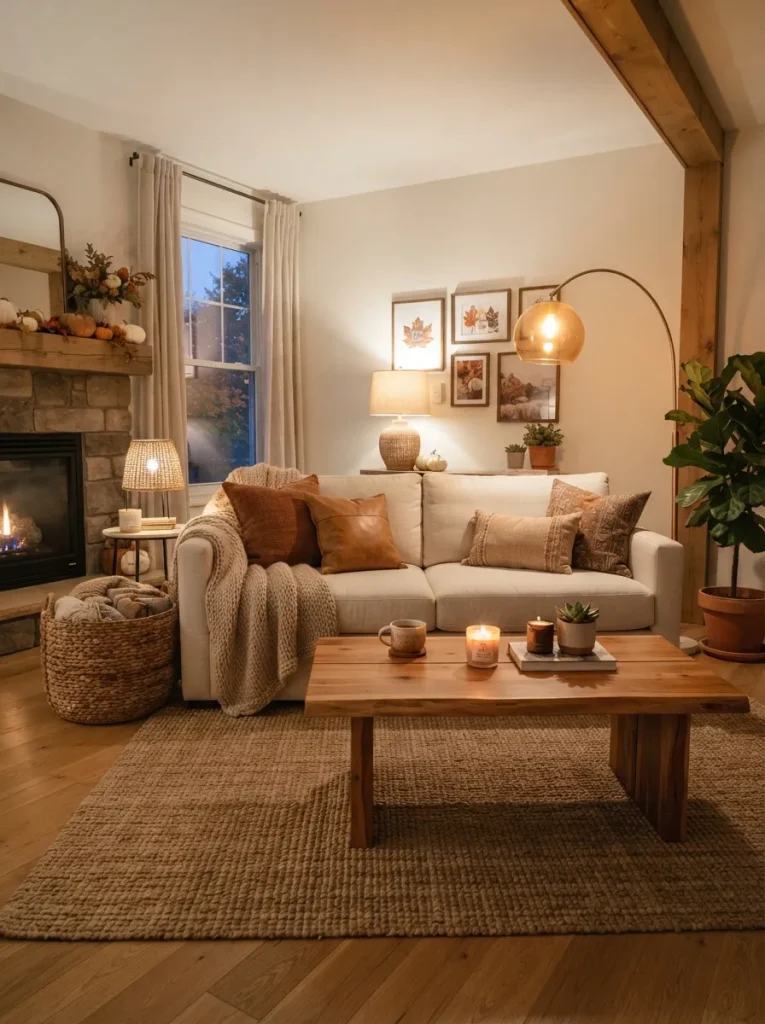
Cozy lighting can change the entire feeling of a fall living room, especially when daylight begins fading earlier. Instead of relying on one ceiling fixture, layer a table lamp, floor lamp, and a few warm accent lights around the seating area. Choose linen, paper, or textured fabric shades to create a softer glow. Pair the lighting with cream upholstery, wood furniture, chunky throws, and amber-toned accessories for a relaxed autumn palette. In my experience, warm bulbs make neutral rooms feel noticeably more inviting. Keep brighter task lighting near reading chairs and softer illumination around conversational areas for comfort.
The right lighting does more than brighten a room; it highlights the textures that make seasonal decorating feel special. Position a floor lamp beside a sofa or reading chair, while a smaller lamp can sit on a side table near layered pillows. Use warm, diffused light rather than harsh overhead brightness when you want an intimate evening atmosphere. Add a candle-style accent on a shelf or coffee table for another soft point of glow. This approach works especially well in open living spaces because it creates separate cozy zones without physically dividing the room or adding bulky furniture.
Related home styling: Home Decor Ideas
4. Autumn Table Centerpiece
- A simple centerpiece makes an everyday dining table feel instantly more inviting.
- Low arrangements add seasonal color without blocking conversation across the table.
- Wood, linen, dried leaves, and ceramics create warmth through natural textures.
- Battery candles offer a practical way to add a soft evening glow.
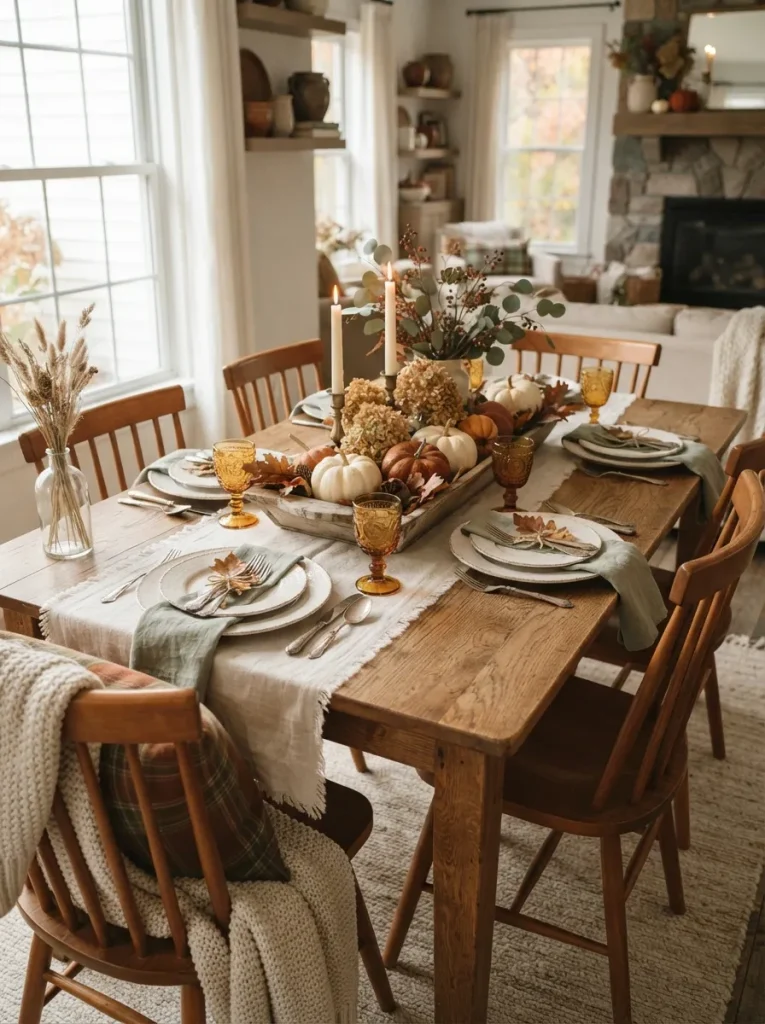
A simple fall centerpiece can make an everyday dining table feel instantly more inviting. Use a low wooden tray filled with small pumpkins, dried leaves, candles, and a few seasonal branches so the arrangement adds color without blocking conversation. Keep the palette restrained with ivory, rust, muted green, and warm brown. A linen runner underneath softens the table and adds texture. In my experience, low arrangements work especially well for busy households because they look styled while leaving plenty of usable space. Choose battery candles when you want a similar glow without worrying about open flames.
For a dining room that feels polished rather than overly seasonal, repeat one or two centerpiece colors in nearby details. Rust napkins, cream plates, or amber glassware can connect the table to the rest of the room without creating visual clutter. Keep decorative objects grouped in odd numbers and vary their heights slightly for a natural composition. If your table is small, use one statement vase instead of several pieces. This is one of the easiest Fall Decor Ideas to adapt because the same foundation can transition from September through Thanksgiving simply by changing a few small accents.
5. Textured Sofa Throws
- A soft throw instantly makes a sofa look warmer and more inviting.
- Chunky knits and brushed fabrics introduce visual depth without adding clutter.
- Oatmeal, caramel, rust, and olive work beautifully with neutral furniture.
- Choose washable materials when the room gets frequent everyday use.
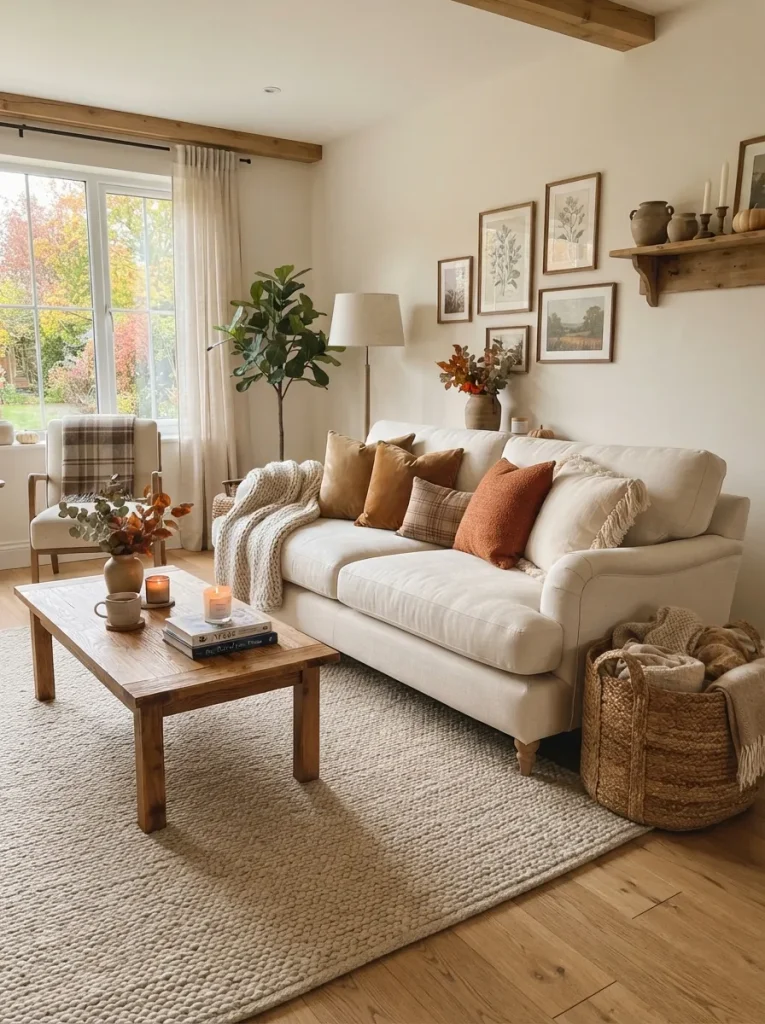
A soft throw is one of the easiest ways to make a sofa look warmer for autumn without replacing furniture. Choose chunky knit, brushed cotton, or textured wool in shades such as oatmeal, caramel, rust, or deep olive. Fold it loosely over one sofa arm or drape it across the corner of a chair for an effortless look. I’ve noticed that one substantial throw often adds more visual warmth than several small accessories. Keep the surrounding cushions relatively simple so the texture remains the star. This also gives guests an easy layer when the room becomes chilly.
Layered textiles can make a neutral living room feel noticeably cozier while keeping the overall design sophisticated. Start with a lightweight base cushion, then add one patterned or textured pillow and finish with a larger throw. Mixing materials such as linen, boucle, cotton, and knitted fabric creates depth without relying on strong colors. For homes with children or pets, washable blankets are a practical choice that still looks polished. Fold the throw neatly when the room is being used formally, or let it fall naturally during relaxed evenings. The result feels comfortable, useful, and ready for cooler weather.
6. Neutral Ceramic Accents
- Neutral ceramics add seasonal personality without making the room feel overly themed.
- Matte finishes bring subtle texture to shelves, consoles, and kitchen displays.
- Grouping two or three pieces creates a cleaner, more intentional arrangement.
- Handmade-looking shapes add character while remaining easy to style year-round.
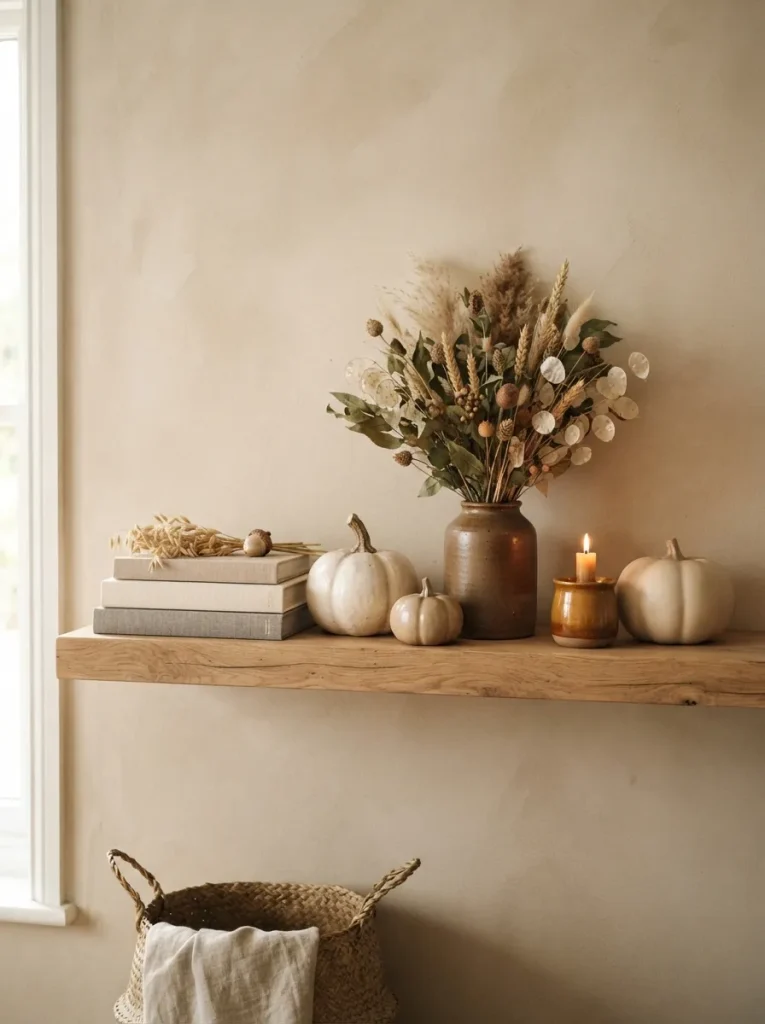
A small collection of seasonal ceramics can add personality to shelves, consoles, and open kitchen displays without making the room feel cluttered. Choose matte cream pumpkins, brown stoneware, amber vases, or handmade-looking pieces with subtle irregular shapes. Group two or three objects together and leave surrounding shelf space open so the display can breathe. That simple spacing helps decorative pieces look intentional rather than scattered. I’ve seen this work well in homes where people want seasonal character but prefer a quieter style. Neutral ceramics are also easy to reuse after autumn by mixing them with everyday dishes.
The best seasonal displays often rely on texture and shape instead of obvious holiday motifs. Place a small ceramic pumpkin beside a stack of books, then add a narrow vase with dried stems for height. On a kitchen shelf, combine stoneware pieces with wood cutting boards or woven accents to create a warm, collected arrangement. Keep colors within a tight palette so different materials feel connected. If storage is limited, select pieces that can serve double duty throughout the year. A beautiful shelf should still feel functional, especially in rooms that are used constantly.
7. Rustic Coffee Table
- A rustic coffee table introduces warmth through natural wood grain and earthy tones.
- A shallow tray keeps candles, ceramics, and small accents organized.
- Rounded shapes can soften a room filled with straight furniture lines.
- Leave enough open surface for drinks, books, and everyday use.
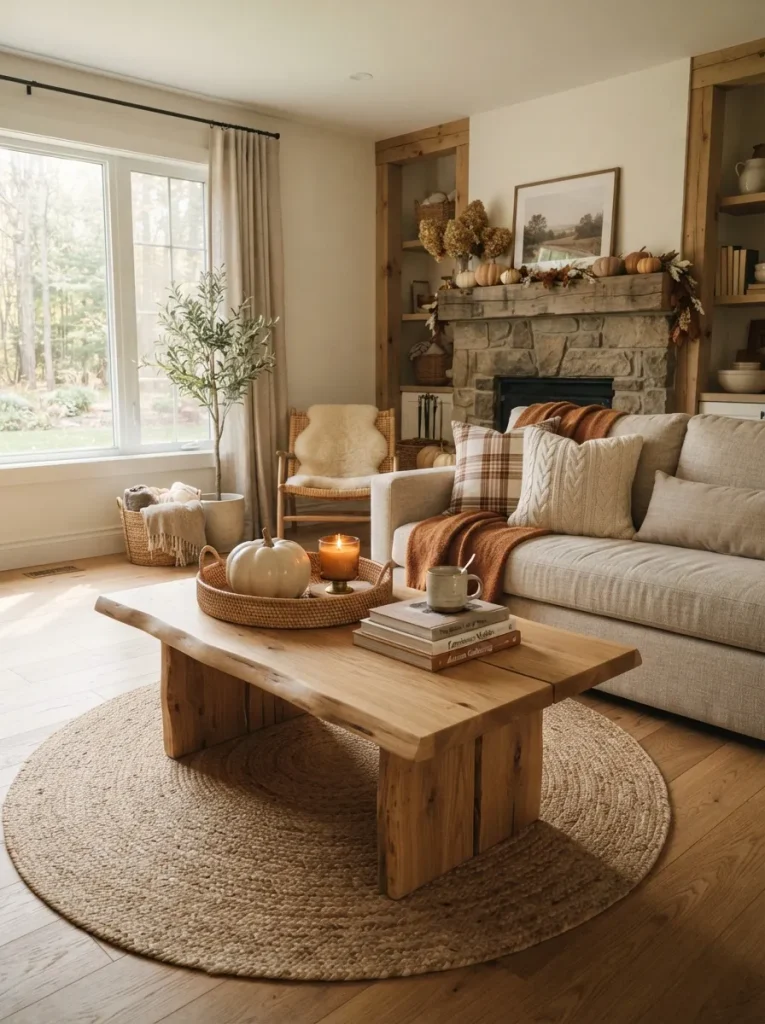
A rustic coffee table can anchor a fall living room with natural warmth and practical charm. Look for visible wood grain, softly rounded edges, or a lightly weathered finish that adds character without feeling dated. Style the center with a shallow woven tray, a ceramic pumpkin, one candle, and a small stack of neutral books. Keep enough empty space for mugs, snacks, and everyday use. In my experience, coffee tables look more inviting when accessories stay contained within one visual zone. The combination of wood, woven texture, and warm neutral colors creates an effortless seasonal foundation.
The beauty of this setup is that it can work in both modern and traditional homes. If your furniture has clean lines, choose a table with organic edges to soften the overall look. If the room already contains several rustic pieces, balance the wood with smooth ceramics and simple linen. A jute or wool rug underneath can visually connect the table to the seating area while adding another layer of texture. Avoid overcrowding the surface because a functional table needs breathing room. A few intentional pieces usually create more impact than a collection of unrelated seasonal decorations.
8. Dried Branch Arrangement
- Dried branches add height and movement without requiring fresh flowers.
- A tall vase can fill an empty corner or brighten a console.
- Muted brown, beige, and dusty green tones blend easily with neutral interiors.
- Choose sturdy branches for a low-maintenance arrangement that lasts beyond one season.
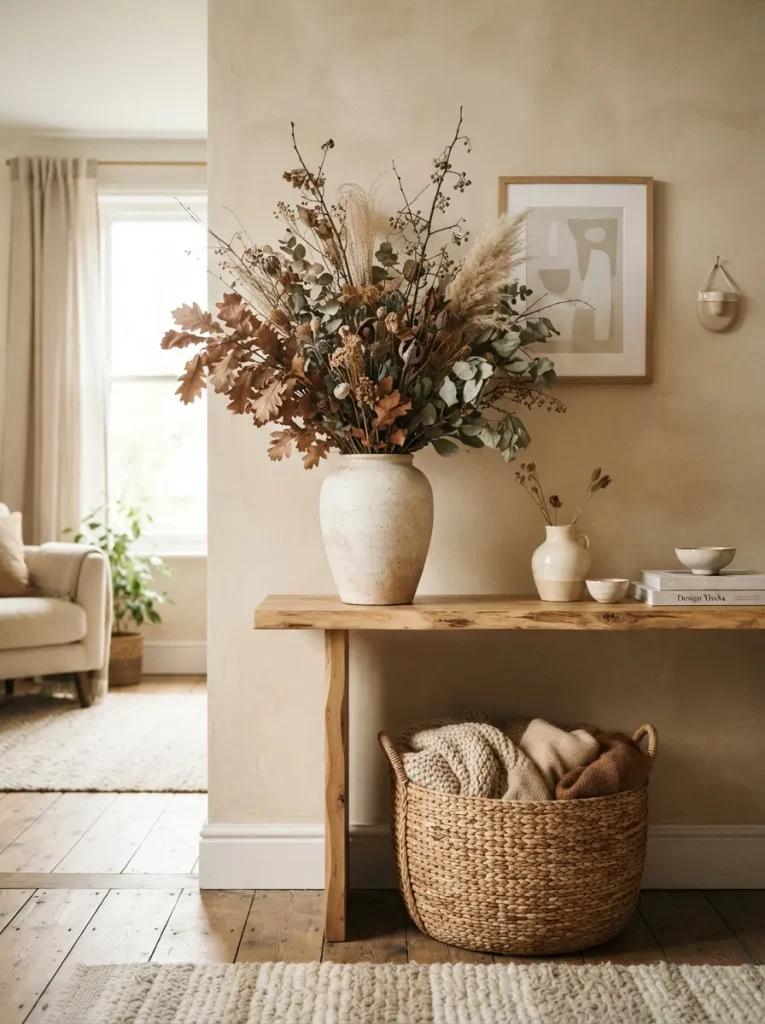
Dried branches are an easy way to bring height, texture, and natural movement into an autumn room. Place tall stems inside a ceramic or glass vase and position the arrangement on a console, dining table, or empty corner. Look for muted brown, beige, dusty green, or soft ochre tones that complement your existing furniture. Unlike fresh flowers, dried branches require very little maintenance and can remain attractive for weeks. I’ve noticed that a tall arrangement works especially well in rooms with low furniture because it draws the eye upward and helps the space feel more balanced.
For a more polished display, choose a vase that visually supports the height of the branches without competing with them. A wide ceramic vessel works well with airy stems, while a narrow glass vase suits delicate branches. Keep the surrounding accessories simple, such as one candle, a small bowl, or a framed print. This prevents the arrangement from becoming visually heavy. If you are decorating a small apartment, place the vase on a slim console rather than using valuable floor space. Natural branches can also transition easily into winter styling when paired with different accessories.
9. Plaid Accent Pillows
- Plaid pillows introduce classic autumn pattern without requiring a major room makeover.
- Neutral backgrounds keep traditional checks looking fresh and modern.
- Combine one plaid pillow with solid textures for a balanced sofa.
- Choose removable covers for easy seasonal storage and cleaning.
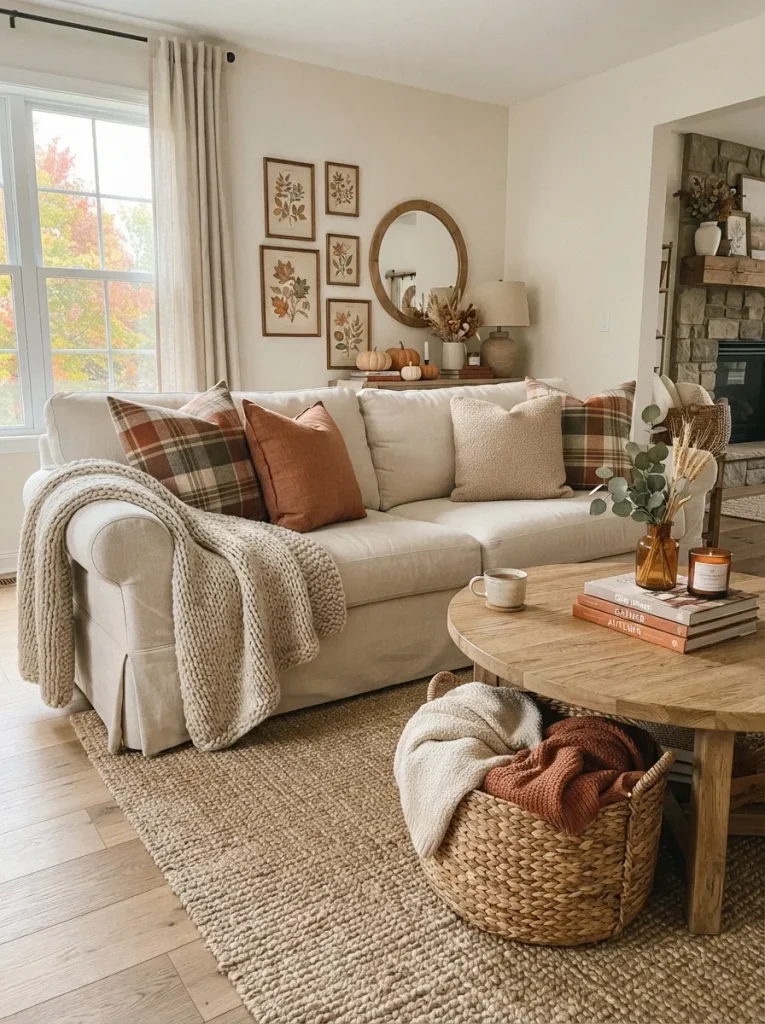
Plaid accent pillows bring an instantly recognizable autumn pattern to a neutral sofa while keeping the rest of the room calm. Choose checks in rust, brown, cream, charcoal, or muted olive rather than overly bright colors. One large plaid pillow paired with solid linen or knitted cushions is usually enough to create a seasonal focal point. This approach works beautifully when your furniture is already neutral because the pattern adds personality without requiring a complete redesign. For practical styling, choose removable covers that can be folded away after autumn and reused when the season returns.
Pattern mixing becomes easier when you keep one color consistent across the cushions. For example, pair a rust-and-cream plaid pillow with a solid rust cushion and an oatmeal textured pillow. Varying the fabric while repeating a shared color makes the arrangement feel coordinated. I’ve noticed that placing patterned pillows slightly off-center creates a more relaxed appearance than making both sides perfectly symmetrical. Keep one area of the sofa relatively open so the room still feels spacious. These small adjustments can make seasonal decorating look intentional, comfortable, and naturally lived-in.
Related home styling: Home Decor Ideas
10. Woven Basket Display
- Woven baskets add warmth while giving blankets, pillows, or magazines a practical home.
- Natural fibers soften rooms filled with smooth furniture and hard surfaces.
- A large basket beside a sofa can fill an awkward empty corner.
- Choose one substantial basket instead of several small ones for a cleaner look.
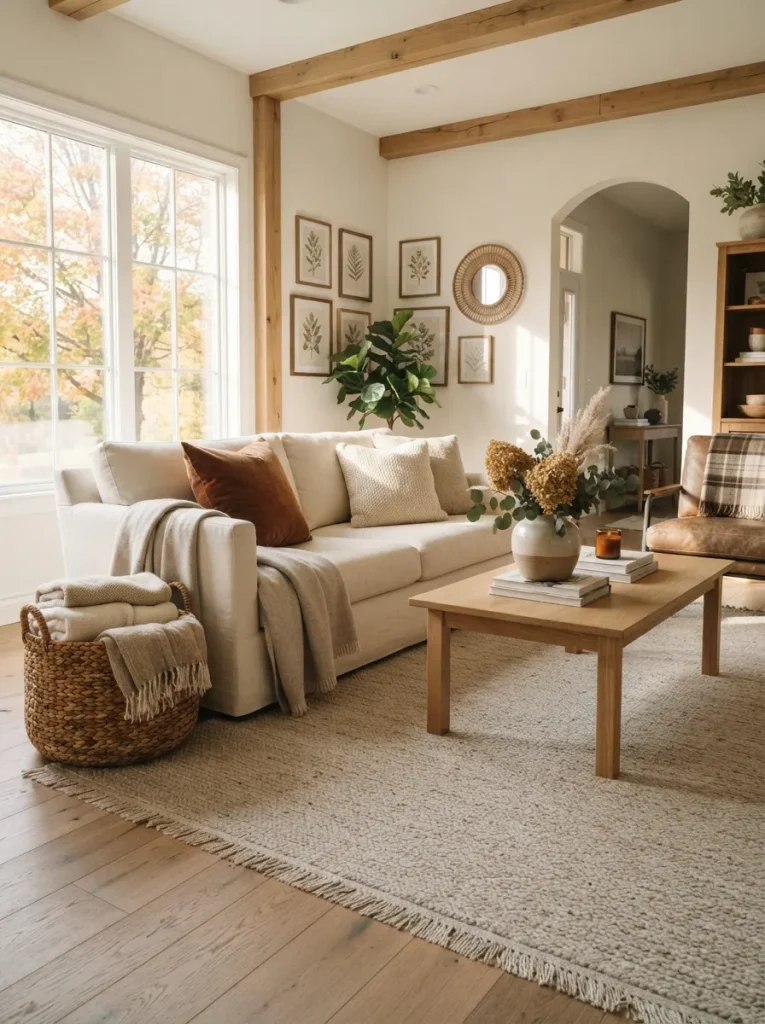
A woven basket can make an empty corner feel purposeful while adding useful storage at the same time. Place a large seagrass, rattan, or jute basket beside a sofa and fill it with folded throws, extra cushions, or magazines. The natural fibers bring warmth to rooms dominated by upholstery, glass, or smooth wood. Choose a basket with enough visual weight to balance nearby furniture without blocking walking paths. In my experience, one generously sized basket often looks more polished than several smaller containers. It also keeps everyday blankets accessible, making the room feel both styled and lived-in.
To create a stronger seasonal connection, fill the basket with throws in oatmeal, camel, rust, or muted olive. You can also place a few dried branches inside an empty basket for a decorative arrangement when storage is not needed. Position it near a reading chair, fireplace, or sofa where its function makes sense. Avoid placing baskets in narrow walkways because their texture should enhance the room rather than create an obstacle. This simple addition works particularly well in apartments and smaller homes where attractive storage needs to serve both a decorative and practical purpose.
11. Amber Glass Accents
- Amber glass introduces a warm glow that complements autumn color palettes.
- Small vases, candle holders, and jars can add seasonal detail without visual clutter.
- Transparent materials keep darker autumn tones from making a room feel heavy.
- Group amber pieces with cream and wood for a softer overall effect.
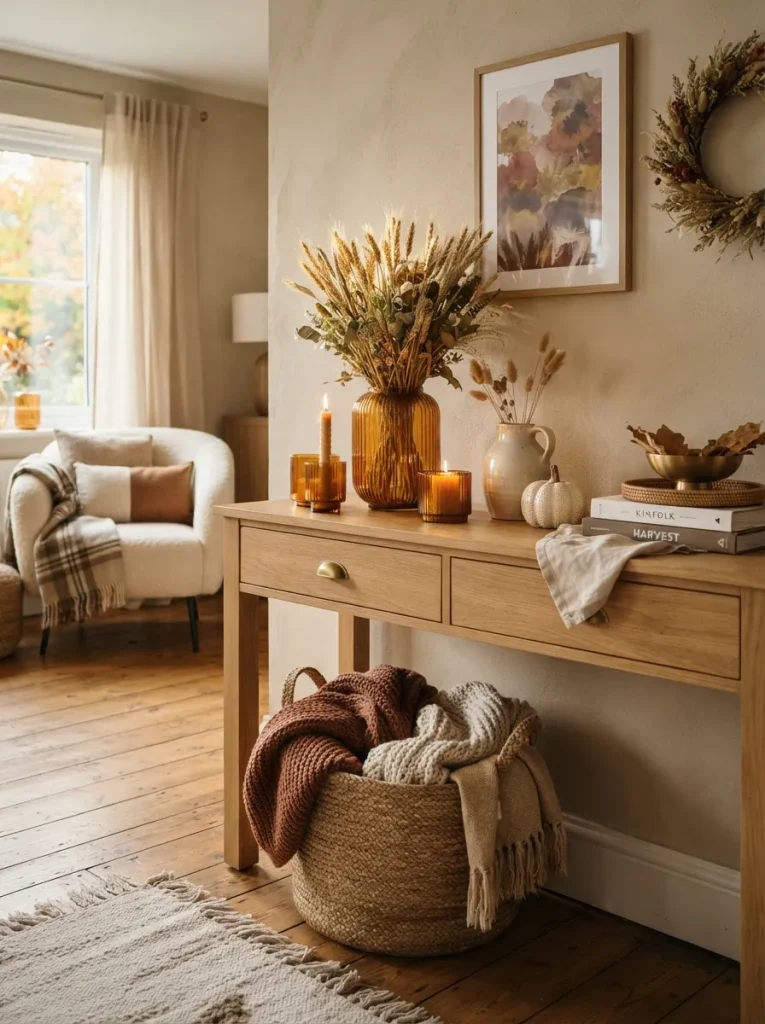
Amber glass is a simple way to introduce autumn warmth without filling a room with seasonal decorations. Small amber vases, candle holders, jars, or decorative bottles can add golden tones to a console, dining table, or open shelf. Their translucent surfaces reflect light beautifully, especially beside lamps or windows. Pair them with cream ceramics, natural wood, and dried stems for a balanced palette. I’ve noticed that amber works best when used in small doses because its color becomes more noticeable as the light changes. Two or three pieces can create a cohesive seasonal accent without overwhelming the room.
The warm tone of amber glass also works beautifully after autumn, making it a practical decorating choice. Arrange a small vase beside a framed print or place candle holders on a dining table with a neutral linen runner. If your room already contains strong colors, choose just one amber accent and let it become a subtle highlight. For evening styling, position the glass near a warm lamp so the material catches the glow. This creates depth without adding more furniture or bold patterns. The result is an inviting space that feels seasonal while remaining sophisticated and flexible.
12. Cozy Reading Corner
- A dedicated chair instantly creates a relaxing seasonal zone within a larger room.
- A floor lamp provides focused light for reading on darker evenings.
- Layer a throw and small cushion for comfort without overcrowding the chair.
- A nearby basket keeps books and blankets organized and within reach.
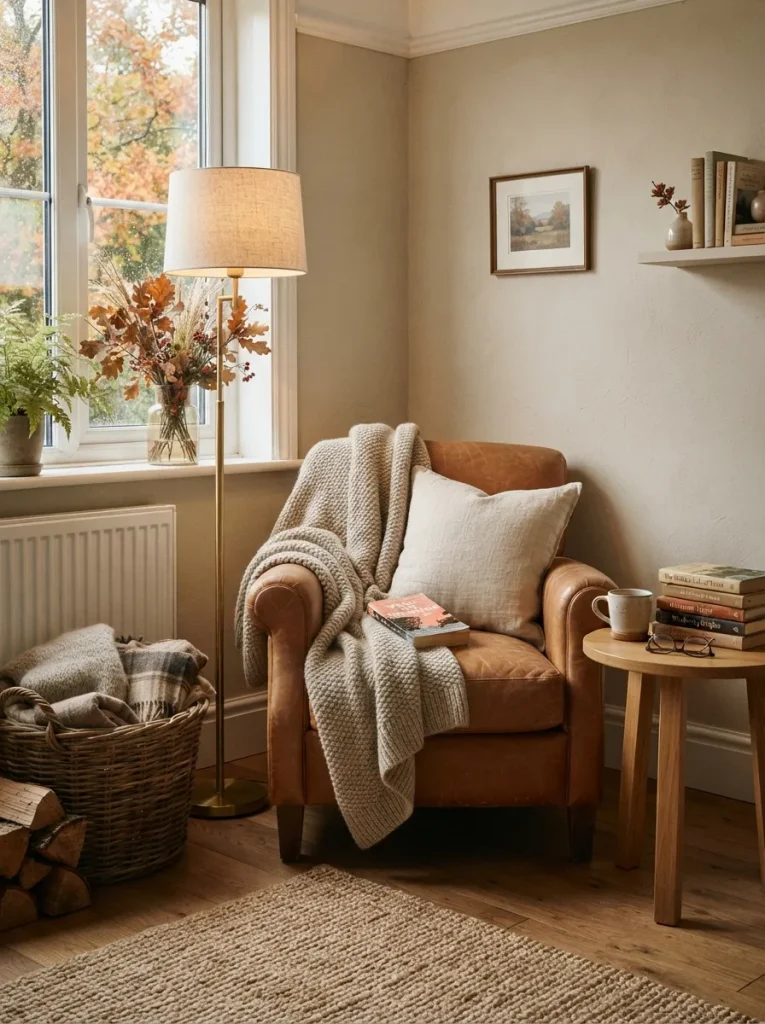
A cozy reading corner can turn an unused section of your home into one of the most inviting spaces for autumn. Start with a comfortable armchair in cream, camel, or warm brown, then add a soft throw and one supportive cushion. Place a slim floor lamp beside the chair so the area remains useful when daylight fades. A small wood side table can hold a mug, book, or candle without taking up much room. This setup works especially well near a window because natural light adds brightness during the day while layered lamps create warmth at night.
Keep the surrounding area simple so the chair remains the visual focus. A woven basket beside it can hold extra blankets or reading materials, while a small rug underneath helps define the zone. If space is limited, choose a compact chair and narrow side table rather than forcing large furniture into the corner. I’ve seen this work well in bedrooms, living rooms, and even wider hallways. The goal is not to create a complicated display, but to make one small part of the home feel comfortable, functional, and intentionally designed for slower autumn evenings.
Related home styling: Home Decor Ideas
13. Pumpkin Shelf Arrangement
- Small pumpkins create an easy seasonal update for open shelves and bookcases.
- Mixing ceramic, velvet, and natural pumpkins adds variety without visual clutter.
- Keep larger pieces lower and smaller accents higher for balanced proportions.
- Neutral pumpkins can remain in place longer than strongly themed decorations.
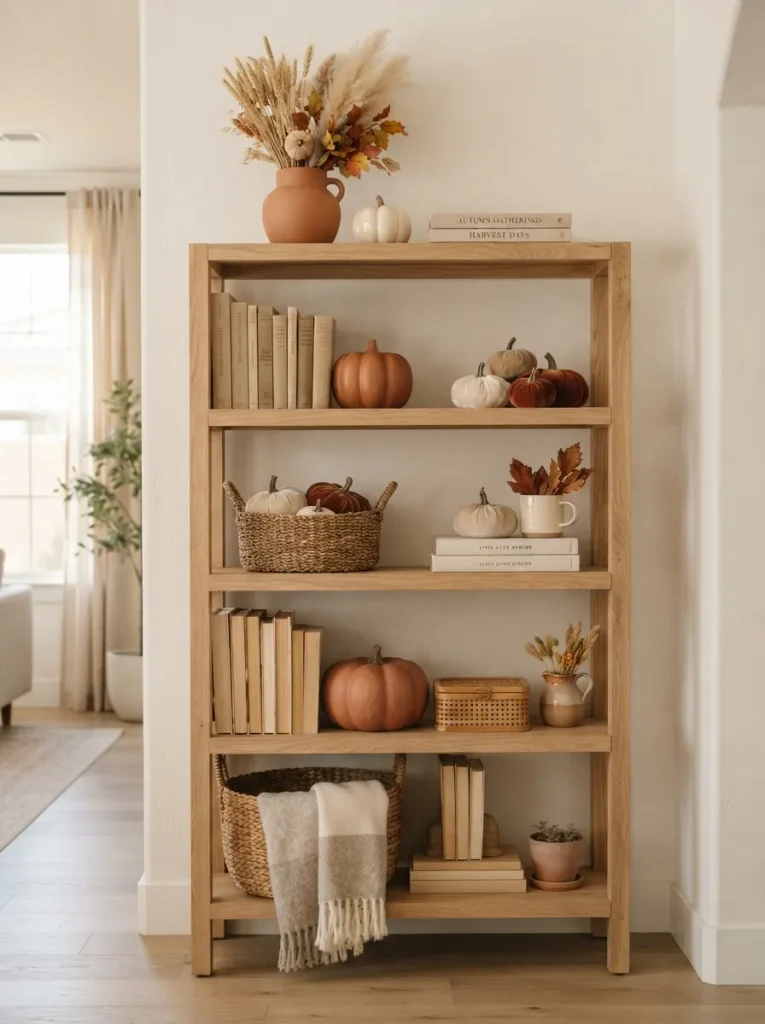
A pumpkin shelf arrangement can bring autumn character to a room without turning the display into a holiday-themed collection. Start with a few small pumpkins in cream, terracotta, muted orange, or soft brown, then mix in books, ceramic vases, and dried stems. Vary the shapes and heights so the shelves feel layered rather than repetitive. Place larger objects toward the lower shelves and smaller accents higher up to create visual balance. In my experience, neutral pumpkins are especially useful because they blend with everyday decor and can stay displayed throughout the season without feeling too specific.
For a polished bookshelf, avoid filling every shelf with seasonal pieces. Leave some open space and use books as natural risers for smaller pumpkins or ceramics. A dried branch can introduce height on one side while a stack of books balances it on another. If your shelves are dark wood, choose lighter pumpkins and cream ceramics to create contrast. For white or pale shelves, warm terracotta and brown accents can add depth. This simple arrangement gives your room a noticeable seasonal refresh while preserving the clean, organized feeling that makes open shelving attractive.
14. Earthy Dining Layers
- Natural materials make a dining space feel warmer and more connected to autumn.
- Linen runners soften wood tables while adding subtle texture.
- Earthy ceramics and glassware create a coordinated table without matching everything.
- Keep the centerpiece low so the table remains comfortable for everyday meals.
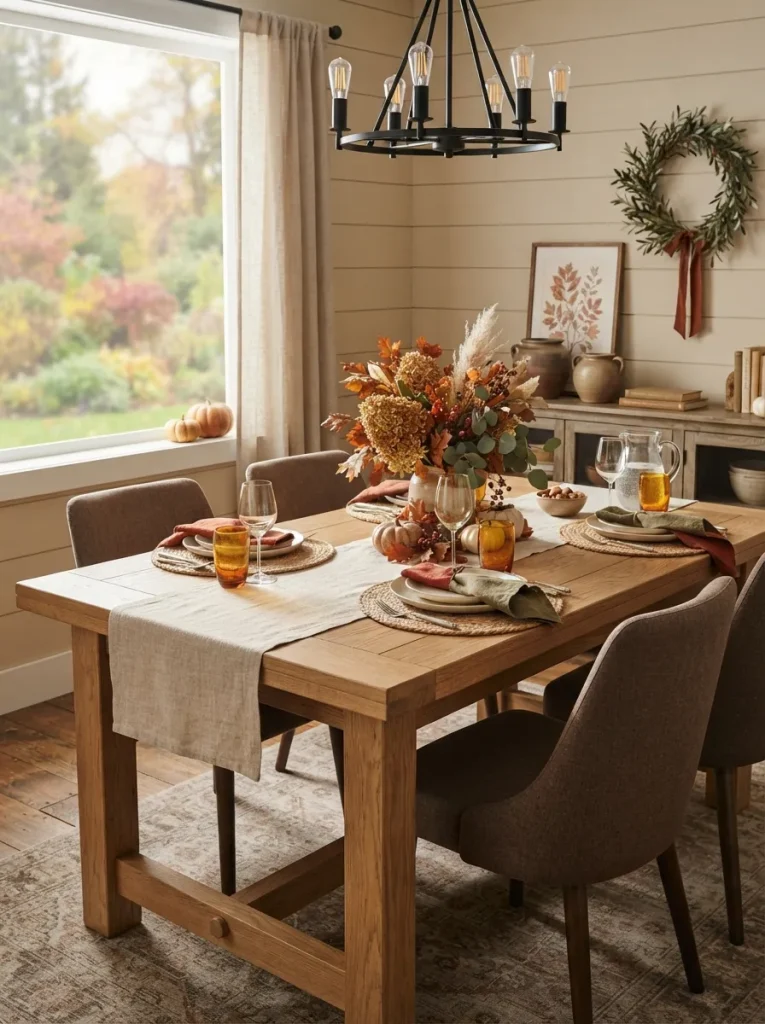
Earthy dining layers can make everyday meals feel warmer without requiring a formal tablescape. Begin with a natural wood table or a simple neutral runner, then add linen napkins, stoneware plates, woven placemats, and amber or clear glassware. Choose shades such as cream, tan, rust, olive, and warm brown to create an understated autumn palette. Keep the centerpiece low enough for easy conversation and serving. That balance is important in real homes because a beautiful table still needs to function for breakfast, homework, family dinners, or casual gatherings without requiring constant rearranging.
Layering different materials is the easiest way to give a dining space more depth. Pair smooth ceramics with woven fibers, slightly rumpled linen, and transparent glass so the table does not look flat or overly coordinated. Add a few dried stems in a low vase for natural height without blocking sightlines. If your dining area is small, use one runner and a compact centerpiece instead of multiple decorative layers. I’ve noticed that repeating one accent color, such as rust or olive, in the napkins and nearby decor helps the entire room feel connected without making the autumn theme too obvious.
15. Wooden Tray Styling
- A wooden tray creates a defined zone for small seasonal accessories.
- Warm wood tones complement ceramics, candles, glass, and woven textures.
- Trays make decorative arrangements easier to move when surfaces need clearing.
- Choose a shallow tray so the display remains visually light and accessible.
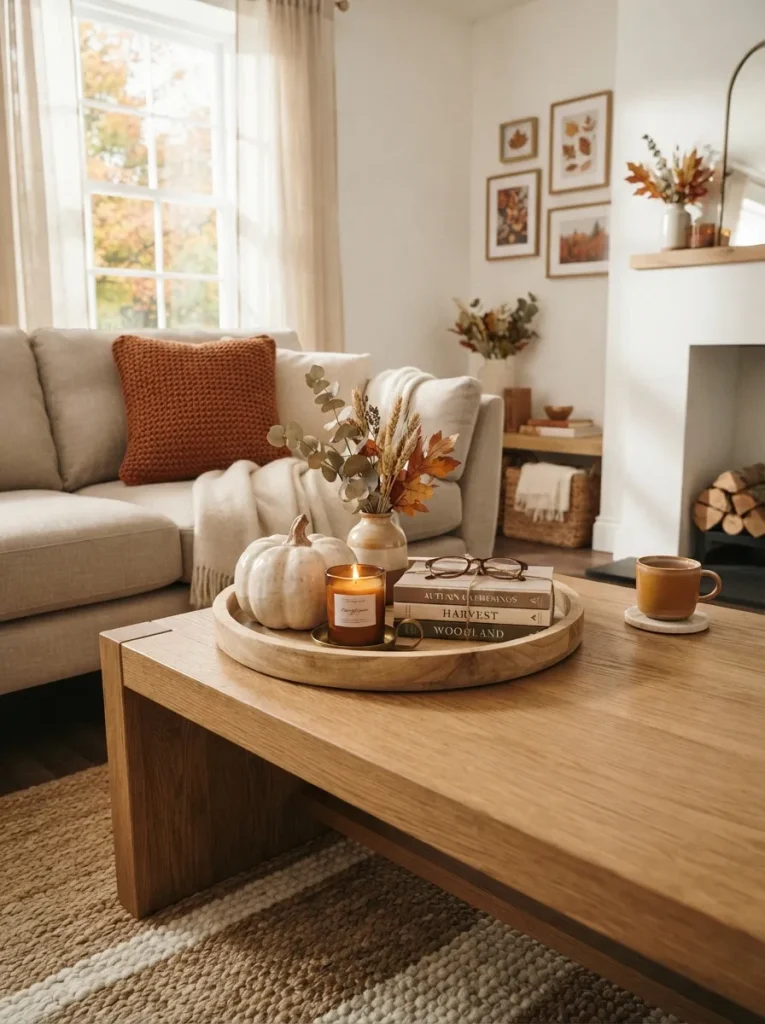
A wooden tray gives small seasonal decorations a clear home and makes a coffee table feel instantly more organized. Choose a shallow tray in natural oak, walnut, or lightly distressed wood, then add two or three complementary pieces such as a ceramic pumpkin, amber candle, small vase, or neutral book. Keeping the arrangement contained prevents individual objects from looking scattered across the table. A tray also makes it easy to move everything at once when you need more space for drinks, snacks, or family activities. This combination of style and function makes it especially practical for busy homes.
The strongest arrangements usually combine different heights, shapes, and textures without becoming crowded. Place a small vase toward the back, a candle near one side, and a lower ceramic accent toward the front. Leave part of the tray visible so the natural wood remains part of the design. If your living room already has plenty of warm tones, select a lighter wood to keep the palette balanced. For a darker room, walnut can add richness. This approach creates a small seasonal focal point while keeping the rest of the coffee table open and easy to use.
Related home styling: Home Decor Ideas
16. Soft Layered Bedding
- Layered bedding makes a bedroom feel warmer without changing the main furniture.
- Combine breathable sheets with a quilt, duvet, and textured throw.
- Cream, camel, rust, and muted brown create a restful autumn palette.
- Keep heavier layers at the foot of the bed for easy nighttime adjustments.
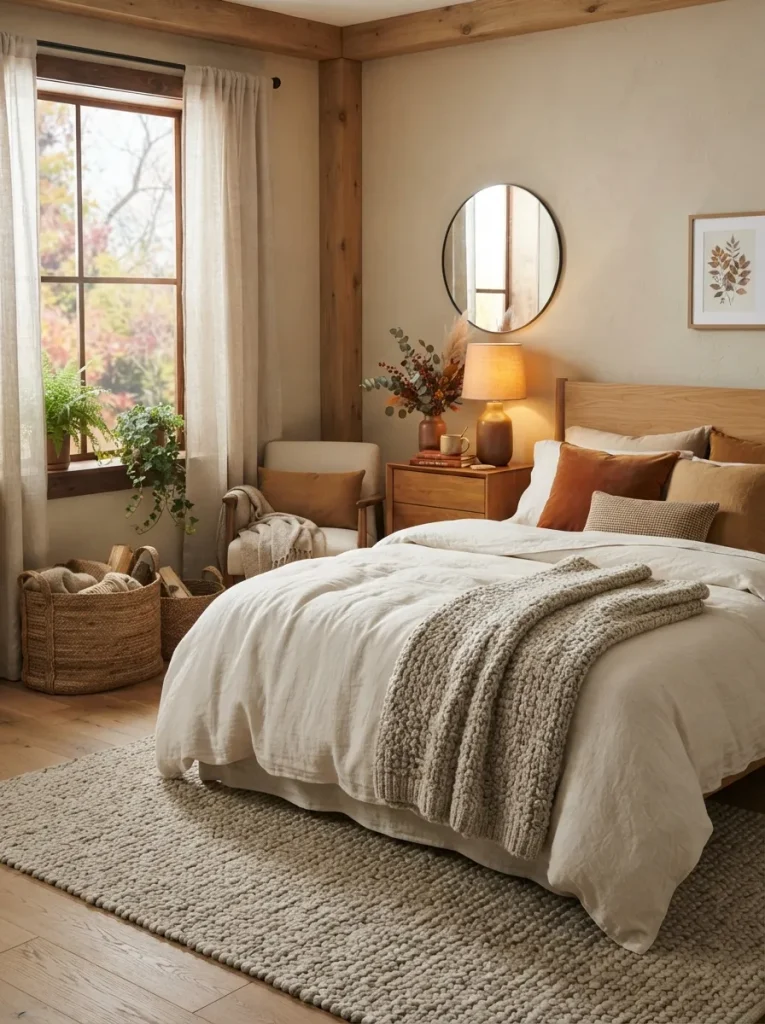
Soft layered bedding can make a bedroom feel noticeably warmer as the weather cools, even if the furniture stays exactly the same. Start with breathable cotton or linen sheets, then add a quilt or lightweight duvet and finish with a textured throw near the foot of the bed. Use cream, camel, muted rust, and warm brown for an inviting autumn palette. The key is layering different textures rather than piling on too many colors. In my experience, placing the heaviest blanket at the bottom keeps the bed comfortable while making the room look intentionally styled.
For a polished bedroom, vary pillow sizes instead of filling the entire headboard with cushions. Use two larger sleeping pillows at the back, followed by one or two decorative cushions in complementary textures. A knitted throw can add softness without making the bedding look overly formal. Keep nightstands relatively simple with one lamp, a small ceramic piece, or a book. This creates visual calm around the bed and lets the textiles provide most of the seasonal warmth. If your bedroom is small, lighter colors can help preserve an airy feeling while still giving you that cozy autumn atmosphere.
17. Natural Wood Layers
- Natural wood introduces warmth without relying on strong seasonal colors.
- Wooden bowls, stools, frames, and trays can add subtle autumn character.
- Mix light and medium wood tones carefully to create visual depth.
- Balance wood with soft textiles and ceramics to prevent the room feeling heavy.
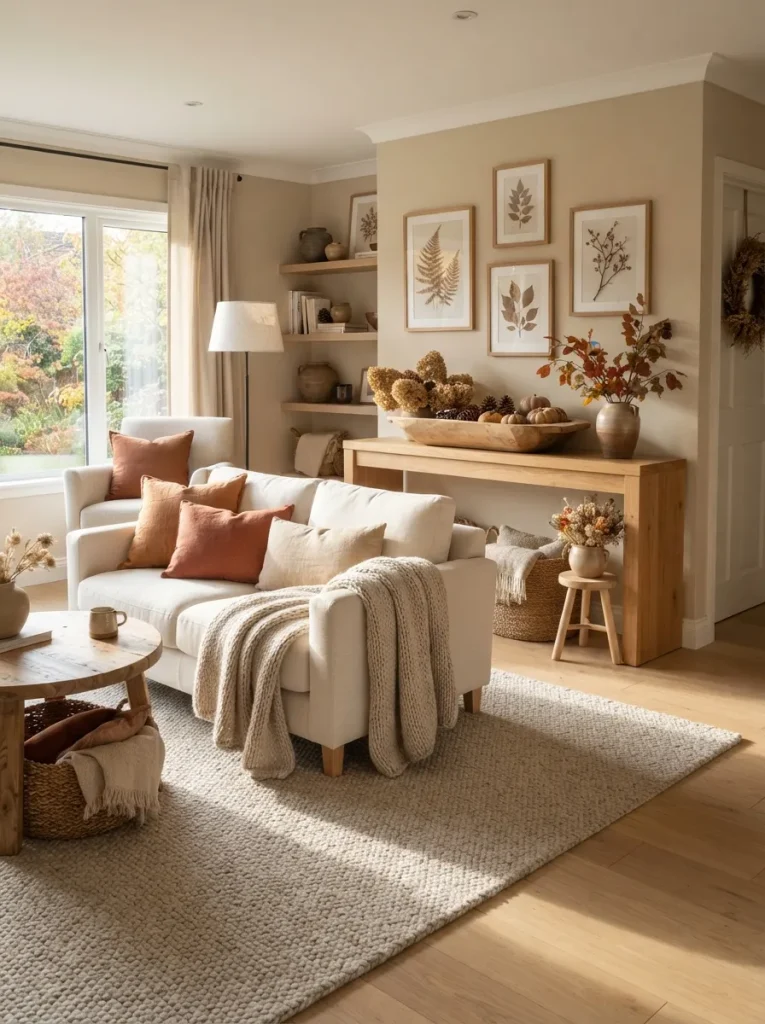
Natural wood is one of the easiest ways to warm a room for autumn without adding obvious seasonal decorations. Introduce it through a small stool, wooden bowl, console, picture frame, tray, or side table. Light and medium wood tones work particularly well with cream, beige, rust, olive, and brown textiles. Rather than matching every wooden piece, allow slight differences in grain and finish to create a more collected appearance. I’ve noticed that wood looks especially inviting when paired with soft materials such as linen, wool, boucle, or cotton because the contrast makes both textures more noticeable.
If your room already contains plenty of wooden furniture, use smaller accents instead of adding another large piece. A wooden bowl on a coffee table or a simple frame on a shelf can provide enough warmth. Balance the harder material with a soft rug, upholstered seating, or knitted throw so the space remains comfortable visually and physically. In smaller rooms, lighter oak or ash can help maintain brightness, while deeper walnut can add richness to larger spaces. These natural layers create a timeless foundation that works beyond autumn and can easily adapt to winter styling.
18. Candlelit Window Nook
- A window nook becomes especially inviting when softened with warm textiles and gentle lighting.
- Battery candles add ambiance without requiring an open flame near curtains.
- A compact bench or chair can turn unused space into a useful retreat.
- Keep the palette light so evening lighting feels warm rather than overly dark.
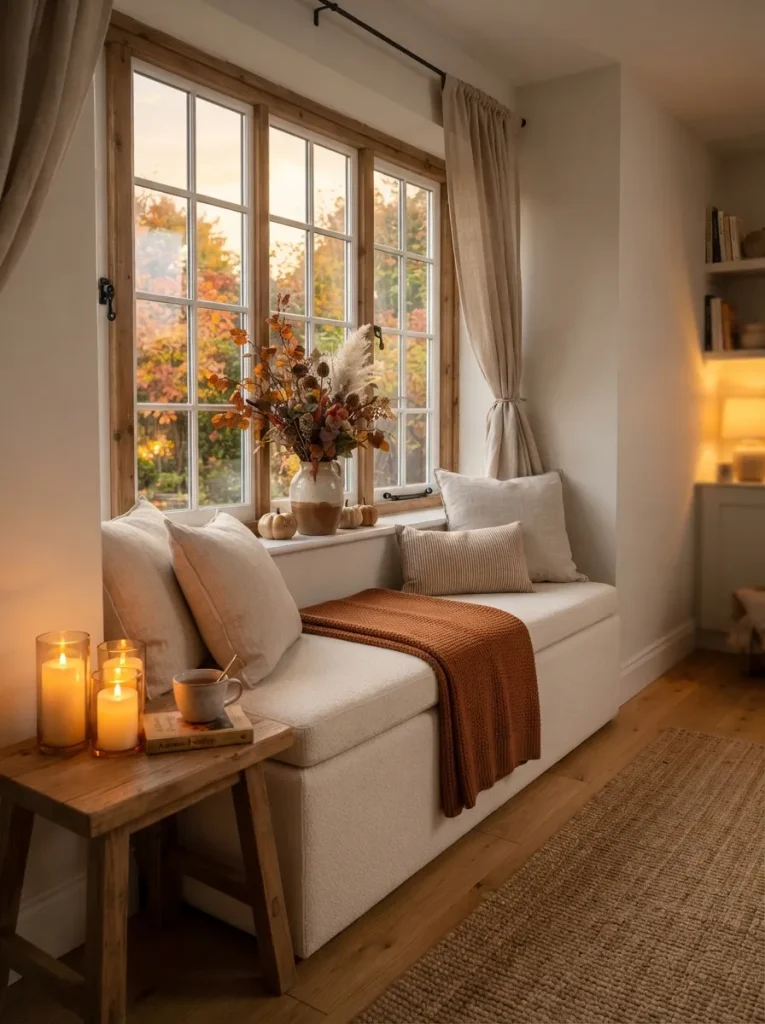
A candlelit window nook can transform an overlooked corner into a peaceful autumn retreat with very little furniture. Place a compact upholstered bench or comfortable chair near the window, then layer it with an oatmeal cushion and rust-colored throw. Add a small wooden side table for a mug or book, and use battery candles for a soft evening glow without placing an open flame near curtains. Keep the surrounding palette light with cream, beige, warm wood, and muted autumn accents. The combination feels intimate after sunset while still looking bright and uncluttered during daylight hours.
Make the nook practical by choosing furniture that fits the exact width of the space and leaves curtains easy to open and close. A slim basket underneath the bench can store extra blankets or books without adding visual clutter. If the window receives strong daytime sunlight, use lightweight curtains to soften the brightness while preserving natural light. I’ve seen small nooks become much more useful when they have one clear purpose, such as reading, relaxing, or enjoying morning coffee. A few thoughtful details can make an unused corner feel like a deliberate part of the home.
Related home styling: Home Decor Ideas
19. Harvest Kitchen Shelf
- Open kitchen shelves are an easy place to introduce subtle autumn details.
- Wood boards and neutral ceramics add warmth without sacrificing functionality.
- Small pumpkins can soften a practical space with a seasonal touch.
- Keep frequently used dishes accessible while placing decorative pieces toward the back.
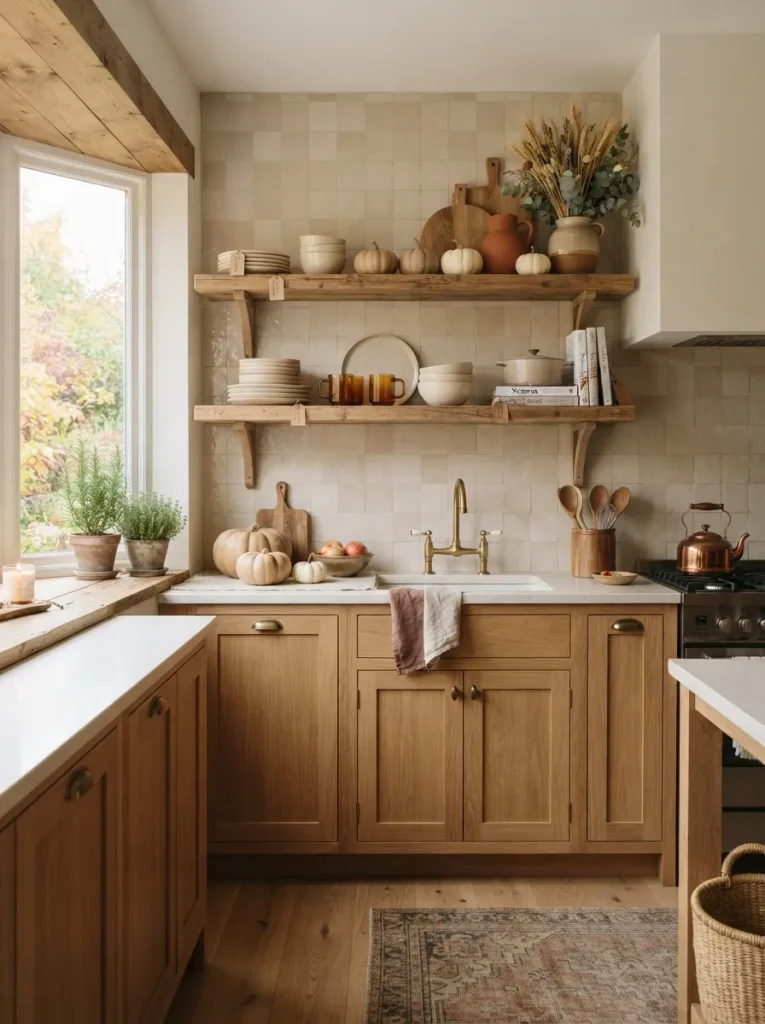
A harvest-inspired kitchen shelf can bring seasonal warmth into one of the busiest rooms in the home. Start with everyday cream plates, neutral bowls, wooden cutting boards, and a few amber mugs, then add small ceramic pumpkins or dried wheat stems. Keep frequently used dishes within easy reach and place decorative accents toward the back or upper shelves. This keeps the display practical while creating a gentle autumn mood. In my experience, kitchens look more natural when seasonal pieces are mixed with useful items rather than arranged as a completely separate decorative collection.
To keep open shelving from looking crowded, work with a limited color palette and repeat materials throughout the display. Natural wood, cream ceramics, amber glass, and muted rust accents create warmth without making the kitchen feel dark. Stack a few plates or bowls to add height, then lean a wooden board behind them for texture. Leave small areas of open shelf between groups so the arrangement can breathe. If your kitchen has limited storage, choose decorative pieces that can also be used for serving. This keeps seasonal styling attractive while respecting the everyday function of the space.
20. Velvet Autumn Cushions
- Velvet cushions add depth through their soft sheen and rich tactile finish.
- Rust, cinnamon, olive, and caramel shades create a sophisticated seasonal palette.
- Combine velvet with linen or cotton to avoid making the sofa feel too formal.
- Use one or two velvet pieces as accents rather than covering every seat.
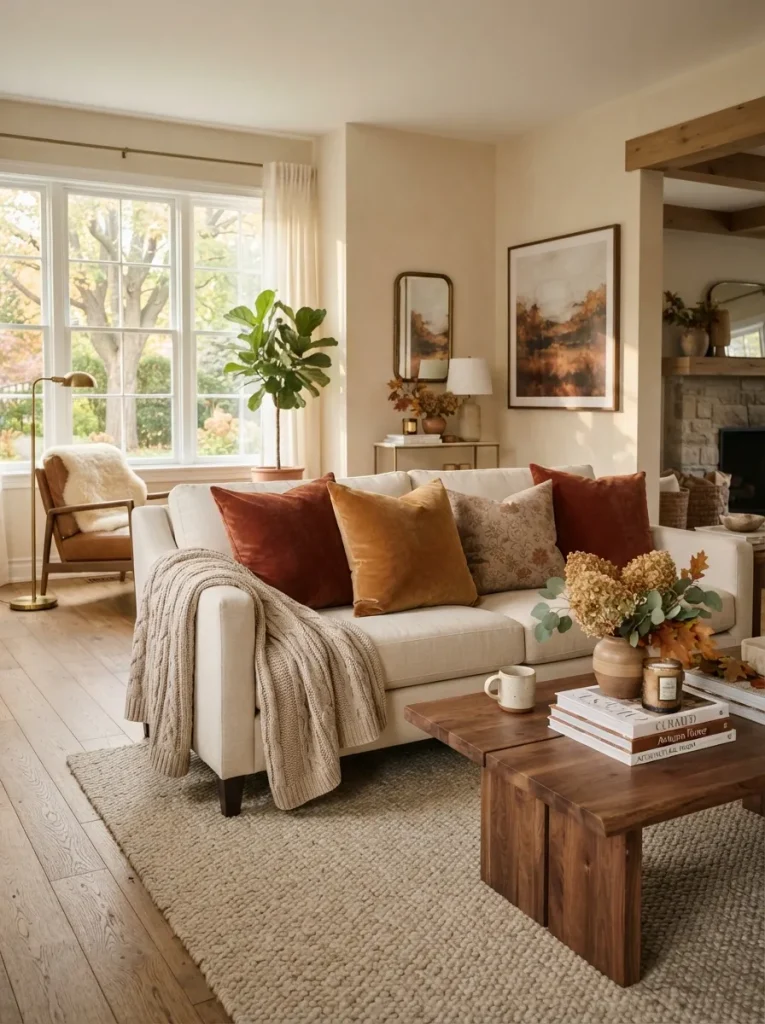
Velvet cushions can make a neutral sofa feel instantly richer for autumn without changing the room’s main furniture. Choose shades such as rust, cinnamon, caramel, deep olive, or warm brown, depending on the colors already in your space. The soft sheen catches natural and evening light, adding subtle depth to an otherwise simple arrangement. Pair one or two velvet cushions with linen, cotton, or knitted textures so the sofa remains relaxed rather than overly formal. I’ve noticed that using velvet as an accent works better than covering the entire seating area because it creates contrast.
For a balanced arrangement, start with larger neutral cushions at the back and place one velvet accent slightly forward. Add a textured throw in oatmeal or cream to soften the richer color. If your room receives limited natural light, choose lighter caramel or muted rust rather than very dark velvet, which can make the space feel heavier. Washable or removable covers are particularly useful in busy homes. This small textile update is one of the easiest seasonal changes because the cushions can be stored compactly and replaced whenever you want a fresh look.
21. Cozy Fireplace Basket
- A basket beside the fireplace adds texture while providing useful blanket storage.
- Natural woven materials complement stone, brick, wood, and painted mantels.
- Keep the basket slightly away from the fire for practical safety.
- Add one folded throw for a relaxed look without making the area feel crowded.
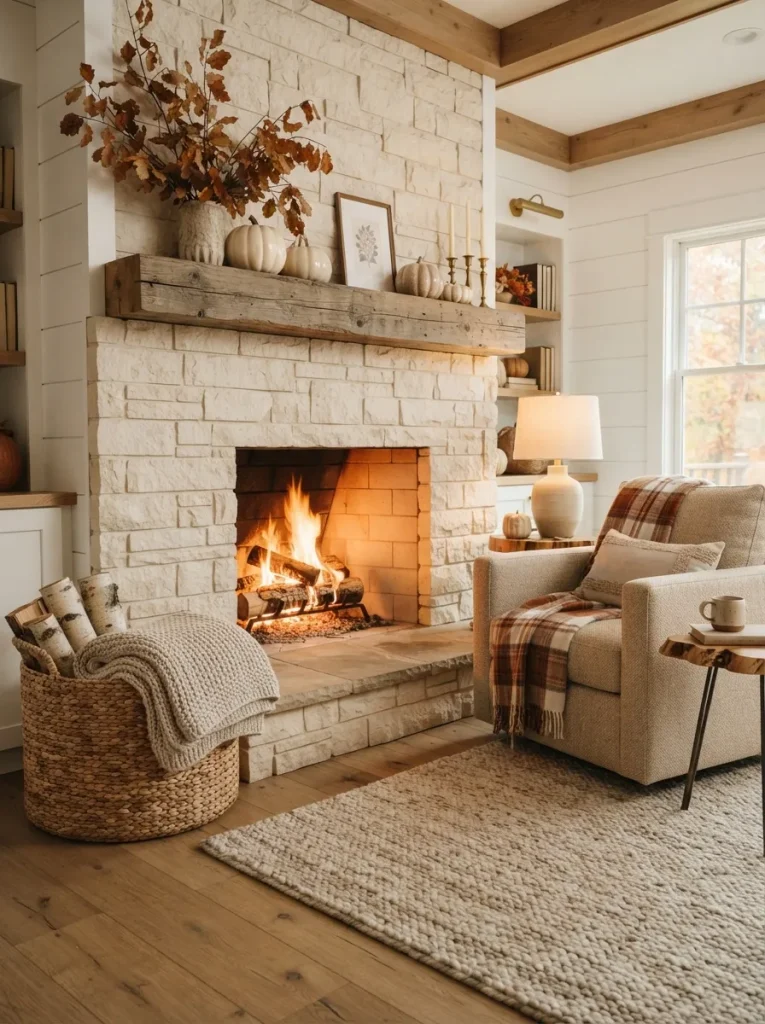
A woven basket beside the fireplace can make the hearth feel warmer while giving blankets a convenient place to live. Choose a sturdy basket in seagrass, rattan, or another natural fiber, then place one or two folded throws inside. Pair the texture with a wooden mantel, neutral ceramics, and a soft rug to create a cohesive autumn setting. Keep the basket safely away from the heat source and leave enough clearance around the fireplace for comfortable movement. The arrangement should feel relaxed, not crowded, with the basket acting as a useful accent rather than another decorative object.
For a more finished look, coordinate the blanket color with nearby cushions or rugs. Oatmeal, cream, camel, and muted rust work especially well against stone, brick, or painted fireplaces. If your fireplace already has strong architectural details, keep the basket simple so it does not compete with the hearth. A small ceramic pumpkin or vase on the mantel can provide a subtle seasonal connection. I’ve seen this setup work particularly well in family rooms because everything remains accessible. The basket looks decorative when tidy but becomes genuinely useful during cool evenings.
Related home styling: Home Decor Ideas
22. Autumn Gallery Wall
- A small gallery wall adds personality without requiring a complete room makeover.
- Botanical prints and earthy artwork create a subtle seasonal connection.
- Mixing wood and neutral frames gives the arrangement a collected appearance.
- Keep artwork colors coordinated with nearby pillows, rugs, or textiles.
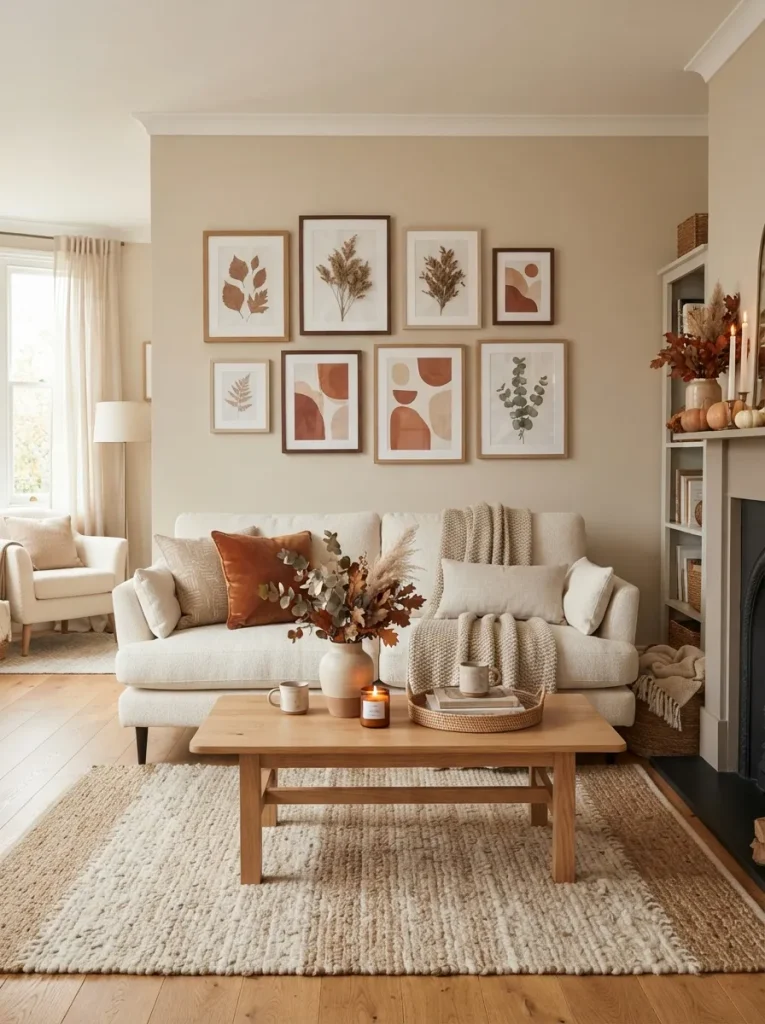
An autumn-inspired gallery wall can refresh a room without changing its furniture or layout. Combine botanical prints, abstract artwork, dried-leaf illustrations, and simple neutral photography in shades of cream, brown, olive, and muted rust. Mix warm wood frames with beige or black frames for a collected look rather than making every piece identical. Arrange the artwork above a sofa, console, or hallway wall where it can become a visual focal point. In my experience, repeating colors from nearby cushions or rugs helps artwork feel connected to the room instead of looking like a separate display.
Before hanging anything, lay the frames on the floor and experiment with spacing and proportions. Keep larger pieces toward the center or lower portion of the arrangement, then use smaller prints to fill the surrounding spaces. A consistent gap between frames helps the wall feel organized even when the artwork styles differ. If you rent your home, consider lightweight frames and removable hanging solutions where appropriate. This approach allows you to introduce seasonal character without making permanent changes. When autumn ends, simply replace a few prints rather than rebuilding the entire gallery wall.
23. Terracotta Pot Cluster
- Terracotta introduces earthy color and natural texture in an understated way.
- Small pots can style shelves, consoles, kitchens, or sunny windowsills.
- Grouping different sizes creates height without needing many decorative objects.
- Use dried stems or low-maintenance plants for a practical display.
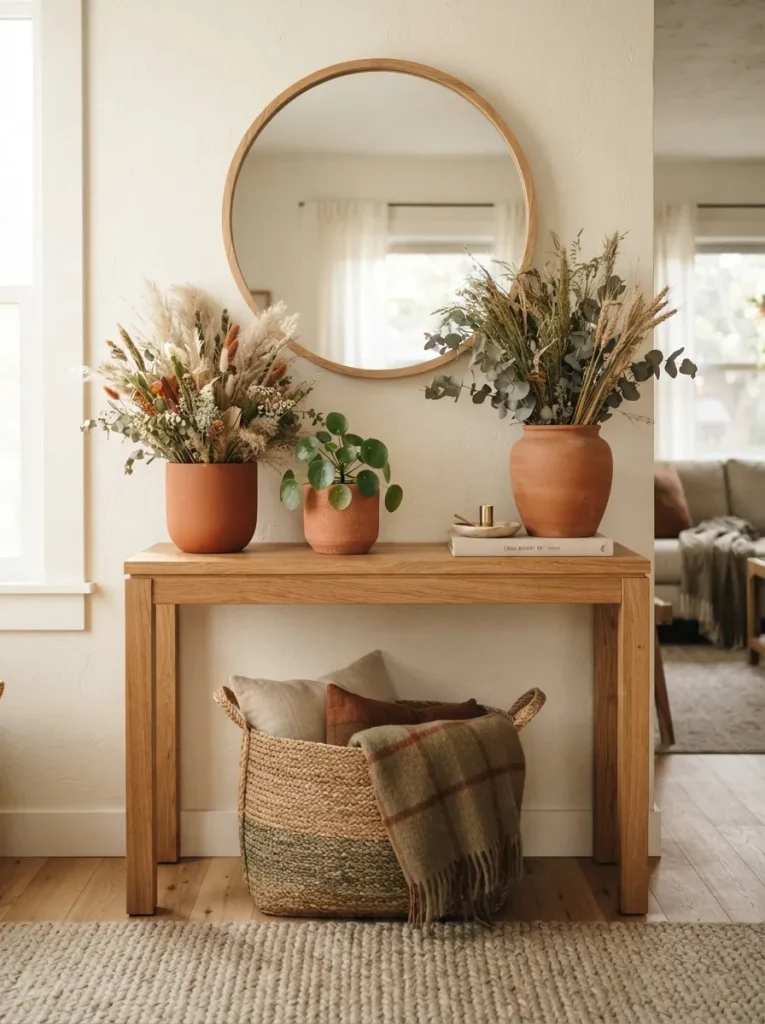
A cluster of terracotta pots can add earthy warmth to a neutral room while bringing in the natural texture associated with autumn. Choose two or three pots in different sizes and arrange them on a console, shelf, windowsill, or kitchen counter. Fill them with dried grasses, small branches, or low-maintenance greenery depending on the available light. The warm clay color pairs beautifully with cream, beige, olive, and natural wood. Keep the shapes simple so the display feels modern rather than overly rustic. A small group often creates more impact than scattering individual pots throughout the room.
Use height variation to make the arrangement visually interesting without adding too many objects. Place the largest pot toward the back, then position smaller pieces slightly forward or to one side. If the surface is narrow, choose taller rather than wider vessels so the display remains practical. I’ve noticed that terracotta looks especially appealing beside pale walls because the warm clay becomes a natural focal point. For a more refined finish, mix one terracotta pot with cream ceramics or woven textures. This creates contrast while keeping the overall arrangement grounded and cohesive.
24. Warm Layered Rug
- A layered rug setup adds softness and visual depth beneath furniture.
- Natural jute works well as a textured foundation for a smaller patterned rug.
- Keep the top rug large enough to visually connect the seating area.
- Neutral patterns make the arrangement easier to use beyond autumn.
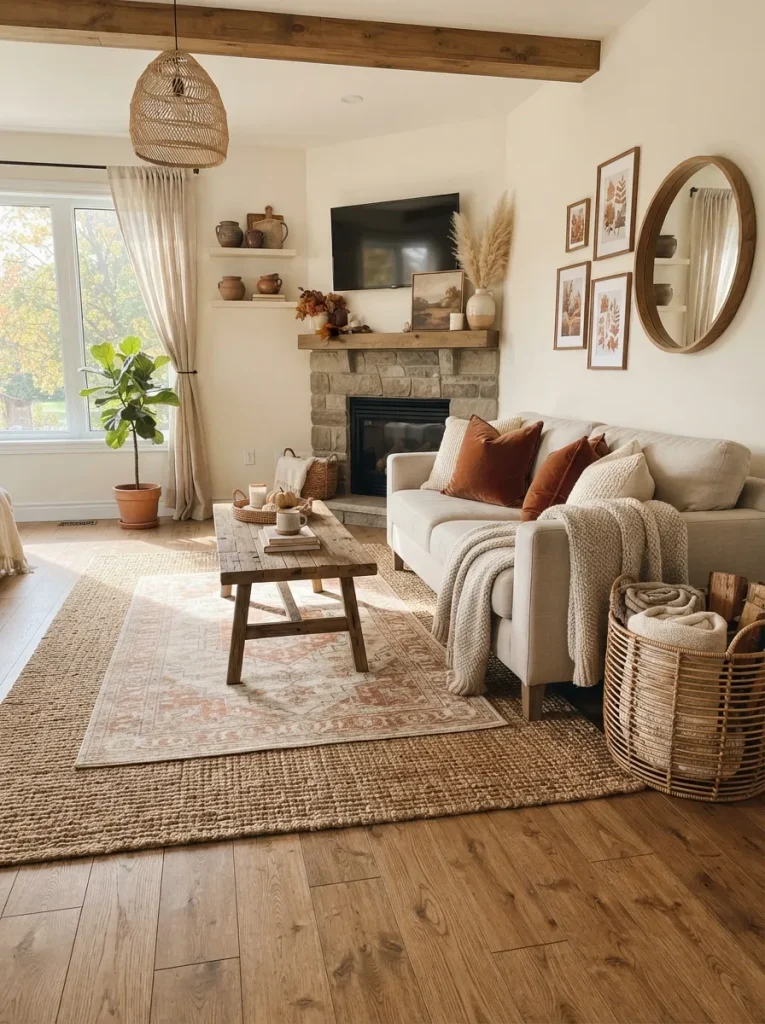
A layered rug setup can make a living room feel warmer and more grounded as autumn arrives. Start with a larger natural jute or woven rug, then place a smaller patterned rug over it to introduce cream, rust, brown, or muted olive tones. The bottom layer adds texture while the upper rug helps define the seating area. Make sure the top rug is large enough to connect the main furniture pieces rather than appearing like a small island in the center. This technique works especially well in open rooms where rugs help visually separate living, dining, or conversation zones.
When layering rugs, choose patterns and textures that complement rather than compete with each other. A simple woven base works well with a subtle geometric or vintage-inspired top rug. Keep the surrounding furniture relatively calm if the upper rug has stronger detail. In my experience, anchoring at least the front legs of the sofa or chairs on the rug makes the arrangement feel more intentional. Check that edges lie flat to reduce tripping risks, especially in busy walkways. The result is a softer, more dimensional floor that makes the entire seating area feel comfortably finished.
Related home styling: Home Decor Ideas
Conclusion
A cozy autumn home doesn’t require a dramatic makeover. With warmer textures, natural materials, thoughtful lighting, and a few seasonal accents, you can create rooms that feel inviting and beautifully lived-in. These Fall Decor Ideas are designed to help you make small changes that bring noticeable warmth and personality to your space. I’ve seen how simple updates can completely transform a room without replacing the furniture. Save this post on Pinterest so you can return to your favorite ideas, try one or two in your own home, and share the inspiration with someone who loves cozy seasonal decorating too.