
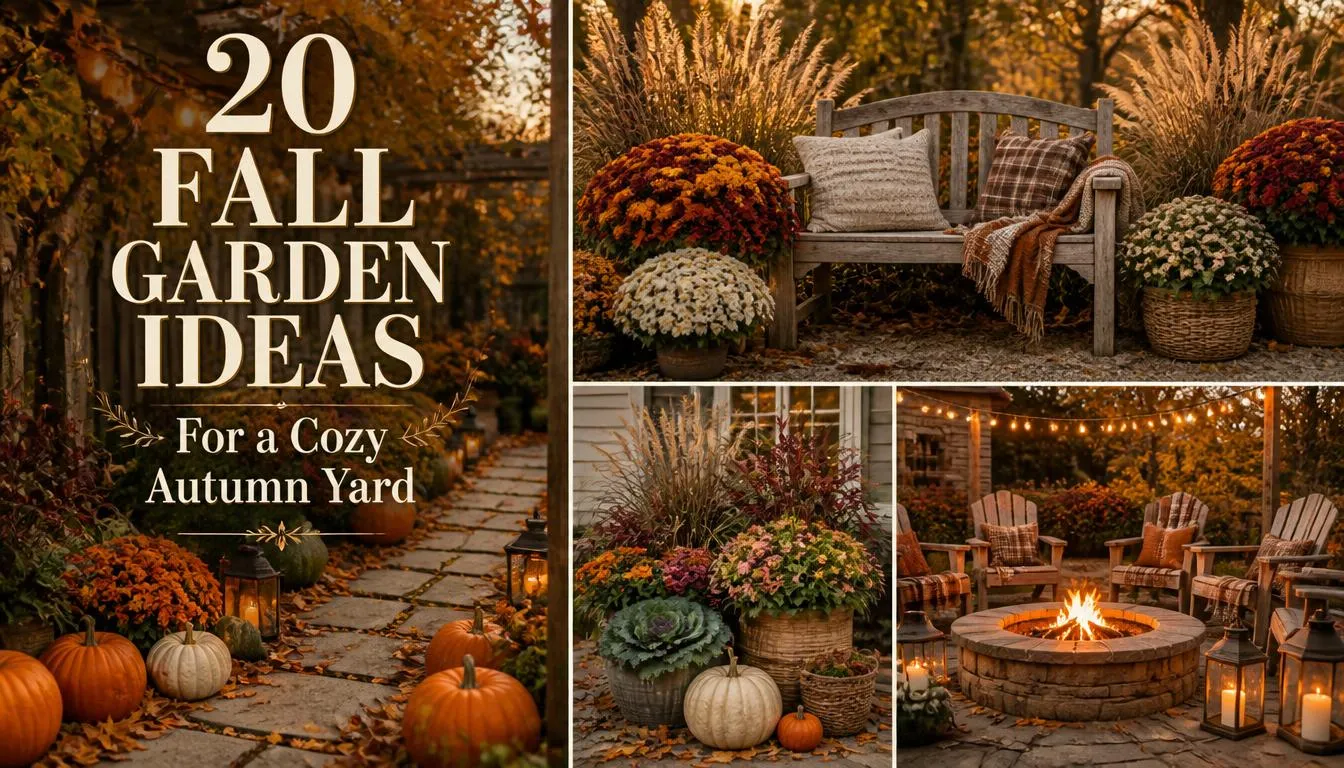
20 Fall Garden Ideas for a Cozy Autumn Yard
Your garden doesn’t have to lose its charm when summer ends. Fall Garden Ideas can turn an ordinary outdoor space into a warm, colorful retreat filled with texture, seasonal beauty, and inviting places to relax.
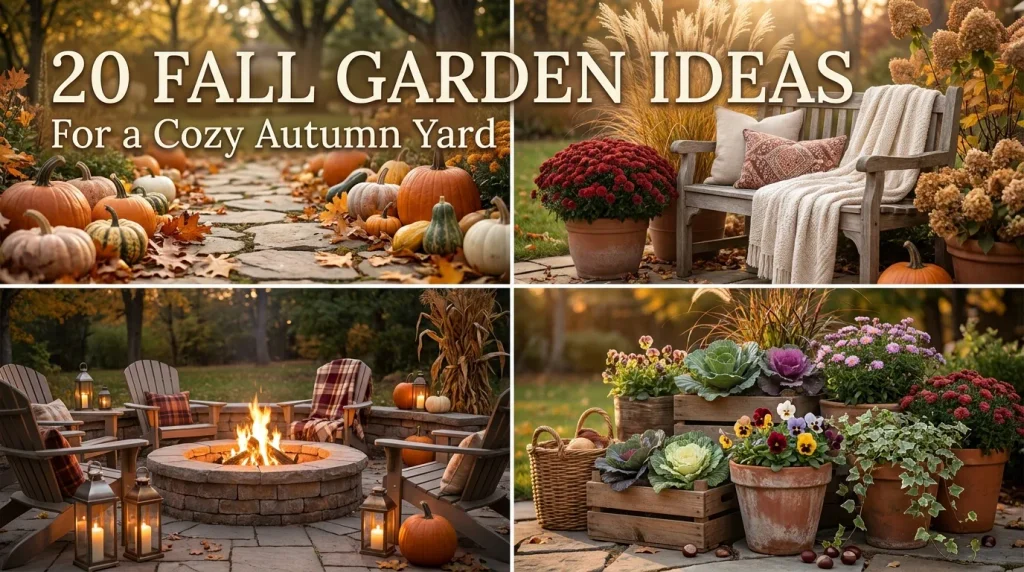
If your yard feels a little bare after summer flowers fade, autumn is the perfect time to refresh it without starting from scratch. Think pumpkins along pathways, glowing lanterns, rustic benches, layered flower beds, evergreen borders, and cozy seating corners. Small changes can make a surprisingly big difference. In my experience, the most beautiful seasonal gardens are not always the most elaborate; they simply combine practical landscaping with a few thoughtful details. These ideas will help you add autumn character while keeping your yard functional, welcoming, and easy to enjoy throughout the season.
1. Pumpkin Pathway
- Line a walkway with pumpkins in varied sizes for instant autumn charm.
- Mix cream, orange, sage, and muted green for a softer palette.
- Tuck pumpkins beside ornamental grasses to blend seasonal décor with landscaping.
- Keep pathways clear so the display remains attractive and practical.
- Use odd-numbered groupings for a more natural, collected appearance.
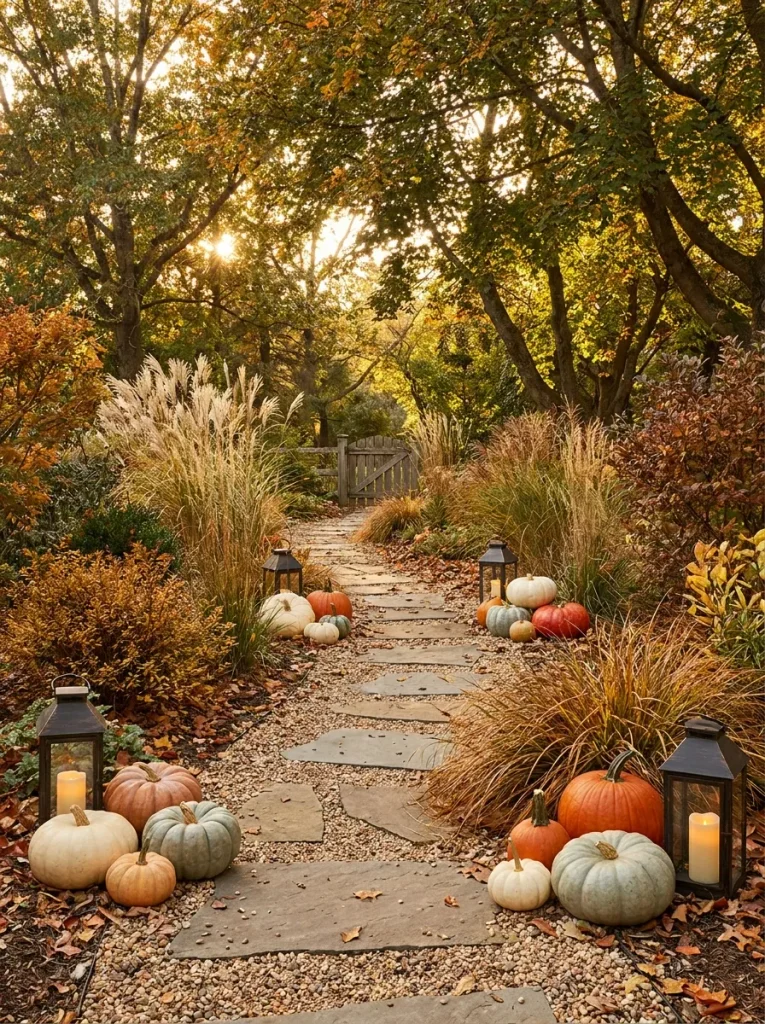
A welcoming autumn garden can start with one simple change: layering pumpkins along a sunny path. Mix cream, orange, sage, and muted green pumpkins in different sizes, then tuck them among ornamental grasses or low shrubs for a collected look. Place larger pumpkins near the entrance and smaller ones toward the edges so the arrangement feels balanced rather than crowded. This setup adds seasonal personality without permanent changes. In my experience, using odd-numbered groupings makes porch and garden displays look more natural, while weather-resistant materials keep the arrangement attractive through cool, damp fall days. home décor inspiration
Pumpkin pathways work especially well when a yard needs a quick seasonal refresh without replacing plants or hardscape. Use a stone, brick, or gravel walkway as the visual anchor, then repeat a few colors beside the path to guide the eye toward a seating area or doorway. Add lanterns between larger pumpkins for gentle evening light, keeping walking surfaces clear and stable. For a polished Pinterest-ready finish, vary pumpkin shapes rather than using identical pieces. The result feels layered, practical, and welcoming while giving ordinary landscaping a distinctly autumnal focal point. home décor inspiration
2. Cozy Seating Nook
- Turn an unused garden corner into a comfortable autumn retreat.
- Choose a weather-resistant bench or compact outdoor chairs.
- Add rust, olive, beige, or plaid cushions for seasonal warmth.
- Place a small side table nearby for mugs, lanterns, or books.
- Keep taller plants behind the seating to create a naturally framed backdrop.
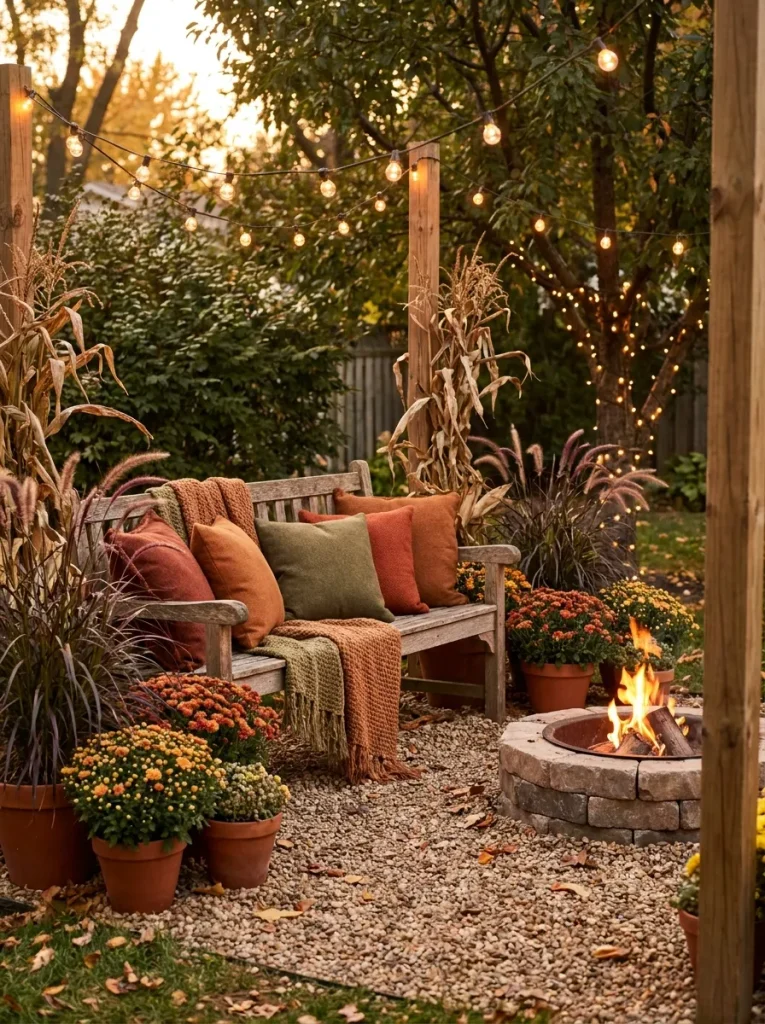
A quiet seating corner can make a garden feel useful long after summer ends. Start with a sturdy wooden bench or two compact chairs, then layer cushions and a weather-resistant throw in warm autumn shades. Position the seating where surrounding plants provide some natural privacy without blocking sunlight. A small table keeps the area functional for coffee, books, or simple outdoor gatherings. I’ve noticed that even a narrow corner feels intentional when furniture is anchored by a rug or defined surface. This approach creates a comfortable destination instead of leaving the garden looking decorative but unused.
For more visual warmth, surround the seating with potted chrysanthemums, ornamental grasses, and a few lanterns that cast a soft glow after sunset. Keep the arrangement slightly asymmetrical so it feels relaxed rather than overly staged. A gravel base can help define the nook while improving drainage around outdoor furniture. These small changes are especially useful for patios and compact yards where every square foot needs a purpose. The finished space becomes a natural spot for reading, chatting, or enjoying crisp evenings, while the layered textures add depth that photographs beautifully for Pinterest. home décor inspiration
3. Seasonal Container Display
- Use containers to add fall color where garden beds look sparse.
- Combine chrysanthemums, pansies, ornamental kale, and trailing greenery.
- Vary planter heights to create a fuller, layered arrangement.
- Choose terracotta, charcoal, or weathered finishes for earthy contrast.
- Group containers near steps, patios, or garden entrances for maximum visibility.
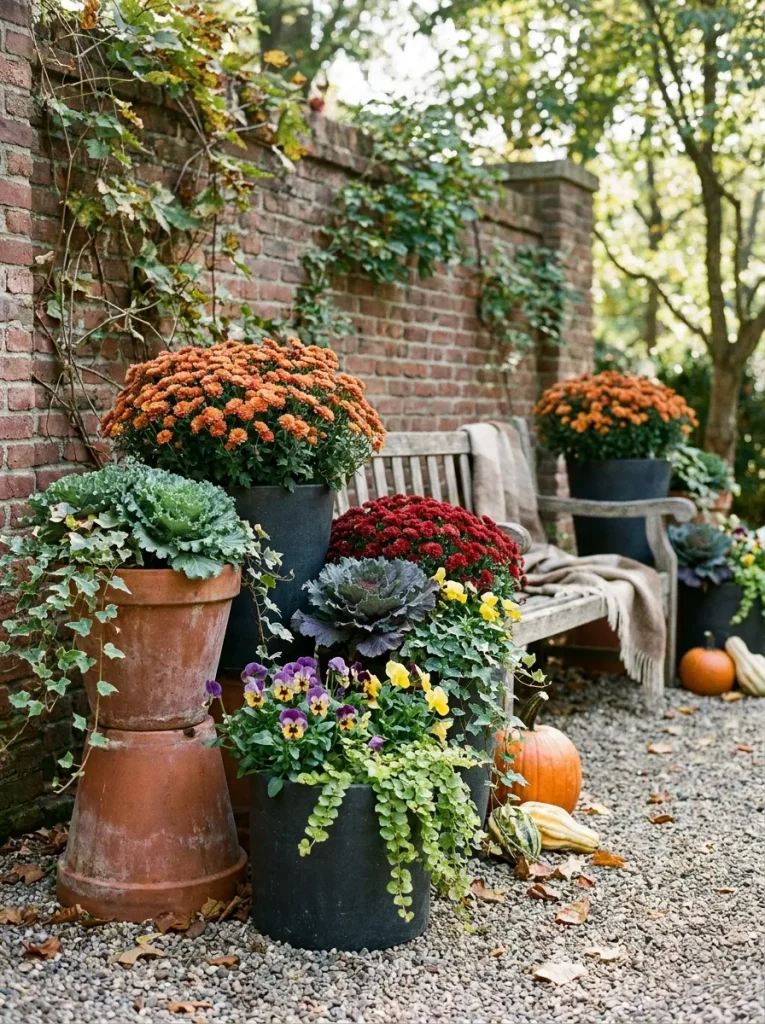
Container displays are one of the easiest ways to bring rich autumn color into a garden without changing established planting beds. Choose three or more planters in different heights, then fill them with flowers and foliage that complement your existing landscape. Chrysanthemums provide strong seasonal color, while ornamental kale and trailing greenery add texture. Place taller containers toward the back and shorter ones toward the front so every plant remains visible. This simple arrangement can brighten bare patio edges, steps, or corners while giving the yard a deliberately designed appearance with very little maintenance.
The best Fall Garden Ideas often work because they are flexible enough for real homes, and seasonal containers are a perfect example. Move them when sunlight changes, replace tired flowers, or rearrange them around outdoor furniture whenever needed. I’ve seen this work especially well in smaller yards because containers create height and color without taking up permanent planting space. For an especially cohesive look, repeat two or three shades across several pots rather than using every autumn color at once. The result feels coordinated, practical, and richly layered without becoming visually overwhelming. home décor inspiration
4. Rustic Fire Pit
- Create a defined gathering spot with a compact stone or metal fire pit.
- Surround it with weather-resistant chairs for comfortable autumn evenings.
- Add gravel, pavers, or natural stone to separate the area from planting beds.
- Use lanterns or low lighting to make the space inviting after sunset.
- Keep decorative materials safely away from the fire area.
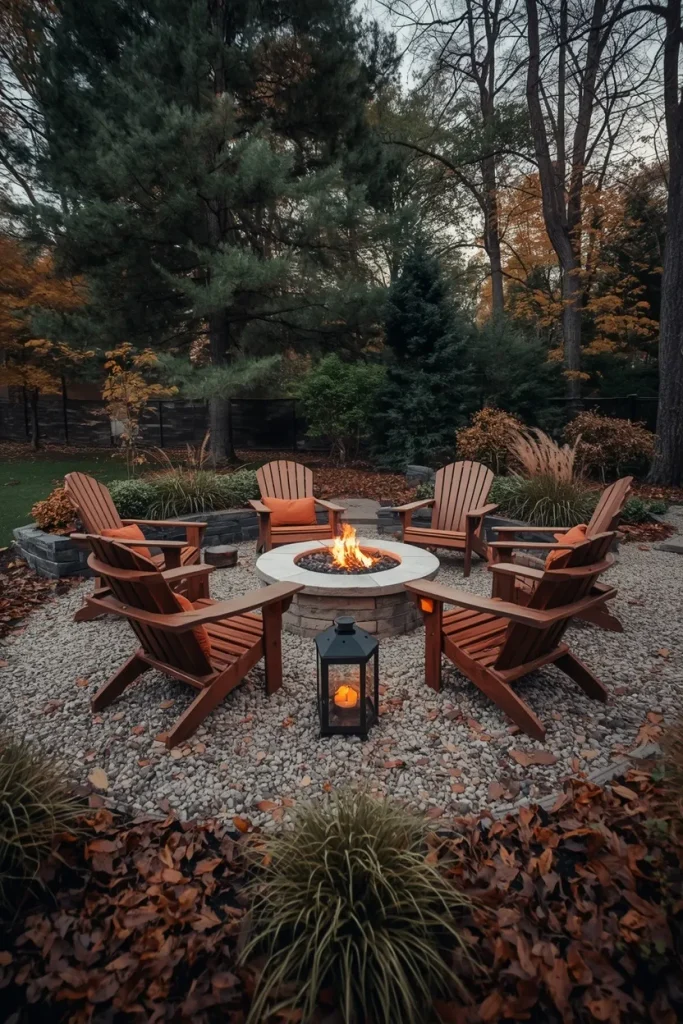
Nothing makes an autumn yard feel more inviting than a dedicated fire pit gathering area. Choose a compact stone, brick, or metal fire pit that suits the size of your garden, then surround it with comfortable weather-resistant seating. A gravel or paver base visually separates the gathering space from nearby planting beds while helping define the layout. Keep furniture positioned with comfortable clearance around the fire and avoid placing loose fabrics too close to flames. The result is a practical focal point where family and friends can relax during crisp evenings.
For a finished seasonal look, soften the hard materials with ornamental grasses, low shrubs, and warm lanterns placed around the perimeter. Stick with natural colors such as charcoal, tan, rust, and brown so the fire becomes the brightest visual feature. A circular arrangement encourages conversation and makes even a modest yard feel more purposeful. If your garden already has a patio, consider placing the fire pit nearby rather than creating an entirely separate zone. This keeps the layout connected while adding a cozy destination that can extend outdoor use into cooler weather.
5. Evergreen Border
- Add evergreen shrubs to keep garden beds visually full through fall and winter.
- Combine dark green foliage with golden grasses for seasonal contrast.
- Use low-growing varieties to define paths without blocking views.
- Repeat similar plants along the border for a cleaner landscape design.
- Mulch beneath shrubs to create a neat finish and conserve moisture.
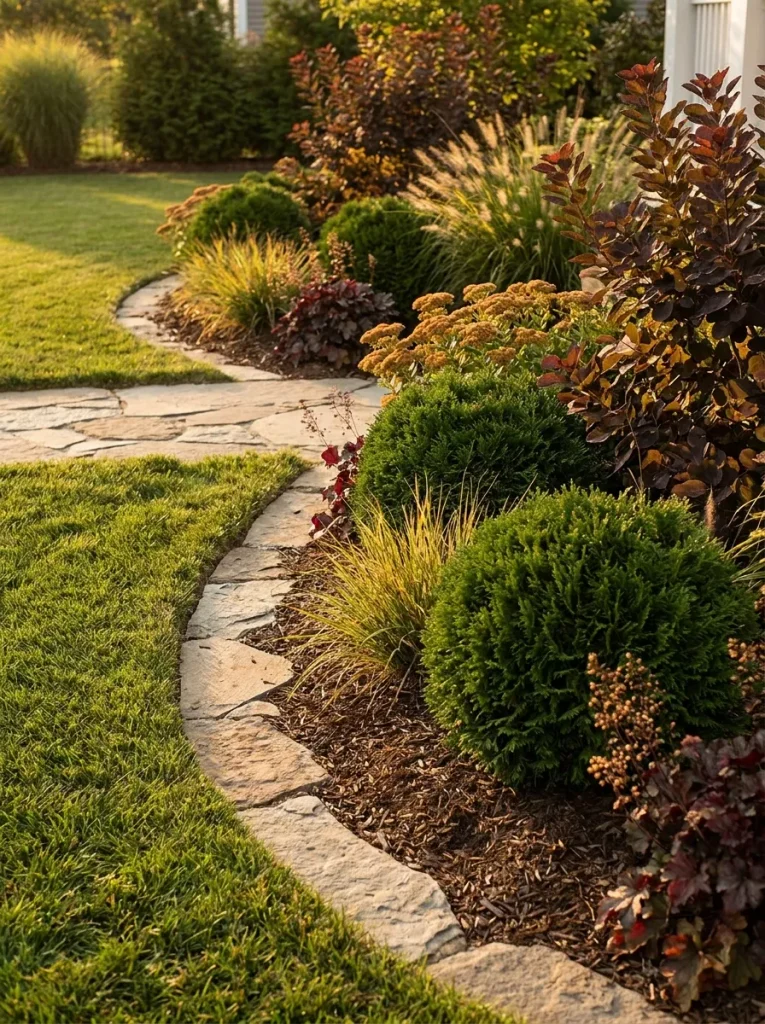
A garden can lose visual fullness as summer flowers fade, but an evergreen border keeps the landscape grounded through the seasonal transition. Plant compact evergreen shrubs along pathways, patios, or the outer edge of a flower bed to create consistent structure. Add golden ornamental grasses or burgundy foliage between shrubs for contrast and movement. The darker green leaves provide a steady backdrop while autumn plants supply temporary color. This combination works particularly well when the yard feels scattered after annual flowers disappear, because the evergreen foundation makes the remaining seasonal plants look more intentional.
Keep the border slightly varied in height rather than creating a perfectly uniform row. Taller shrubs can frame the back, medium plants can fill the center, and grasses or low groundcovers can soften the front edge. Mulch helps unify the planting area and gives the landscape a cleaner finish. In my experience, repeating the same evergreen in several areas creates a stronger sense of continuity than filling every bed with different plants. This approach also makes future seasonal decorating easier because the permanent greenery provides a reliable backdrop for pumpkins, pots, and lanterns.
6. Autumn Herb Corner
- Dedicate a sunny garden section to hardy culinary herbs for fall.
- Combine rosemary, sage, thyme, parsley, and chives in raised beds or containers.
- Use wooden labels to add a simple cottage-garden detail.
- Place herbs near the kitchen entrance when possible for easy harvesting.
- Add gravel or bark around the planting area to keep it tidy.
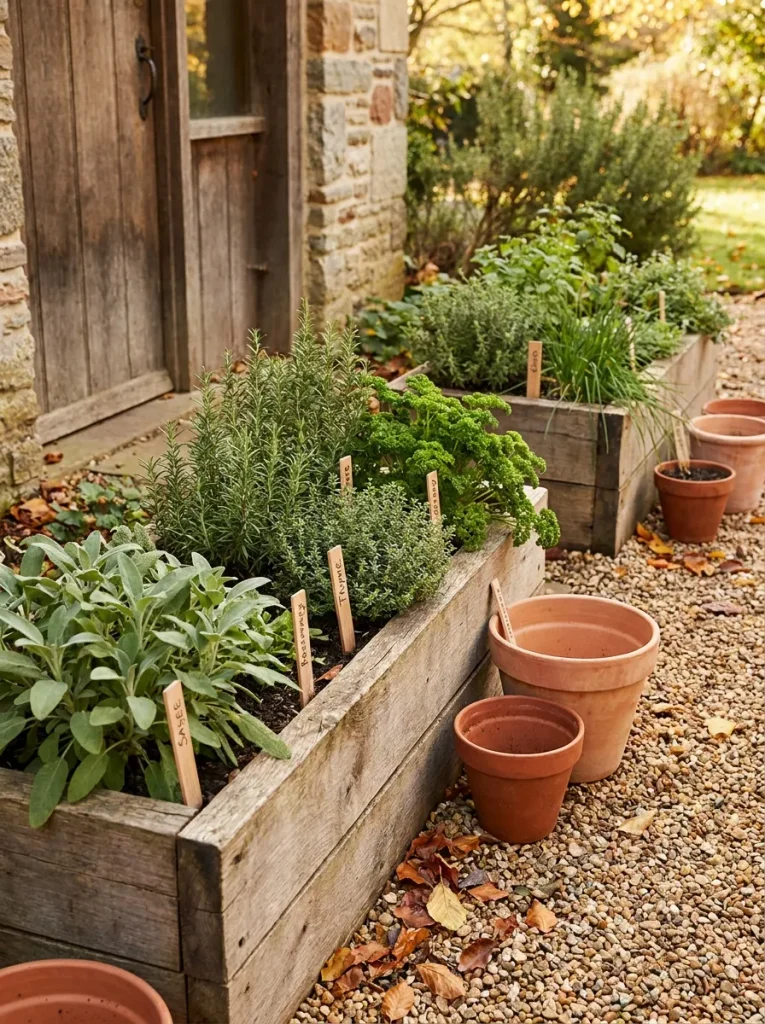
A small herb corner can make an autumn garden beautiful and genuinely useful at the same time. Choose a sunny location and plant hardy herbs such as sage, rosemary, thyme, parsley, or chives according to your local growing conditions. Raised wooden beds work well for a rustic look, while terracotta containers are useful when space is limited. Place frequently used herbs closest to the kitchen or outdoor cooking area so harvesting takes only a few steps. This practical setup adds texture and fragrance while giving an otherwise overlooked garden corner a clear purpose.
For extra charm, add simple wooden plant labels and surround the beds with gravel or bark to create a defined edge. Sage and rosemary provide muted green foliage that looks especially attractive beside autumn-toned flowers or ornamental grasses. Keep taller herbs toward the back and shorter varieties near the front so the arrangement remains easy to see and harvest. Fall Garden Ideas do not need to rely entirely on decoration; combining beauty with function often creates the most satisfying spaces. A productive herb corner can remain useful while naturally blending into the seasonal landscape.
7. Stone Garden Steps
- Use natural stone to create a defined transition between garden levels.
- Combine steps with low shrubs, grasses, and seasonal flowers.
- Choose stones with earthy gray, tan, or warm brown tones.
- Add subtle path lighting for safer evening movement.
- Keep surrounding plants trimmed so the steps remain clear and practical.
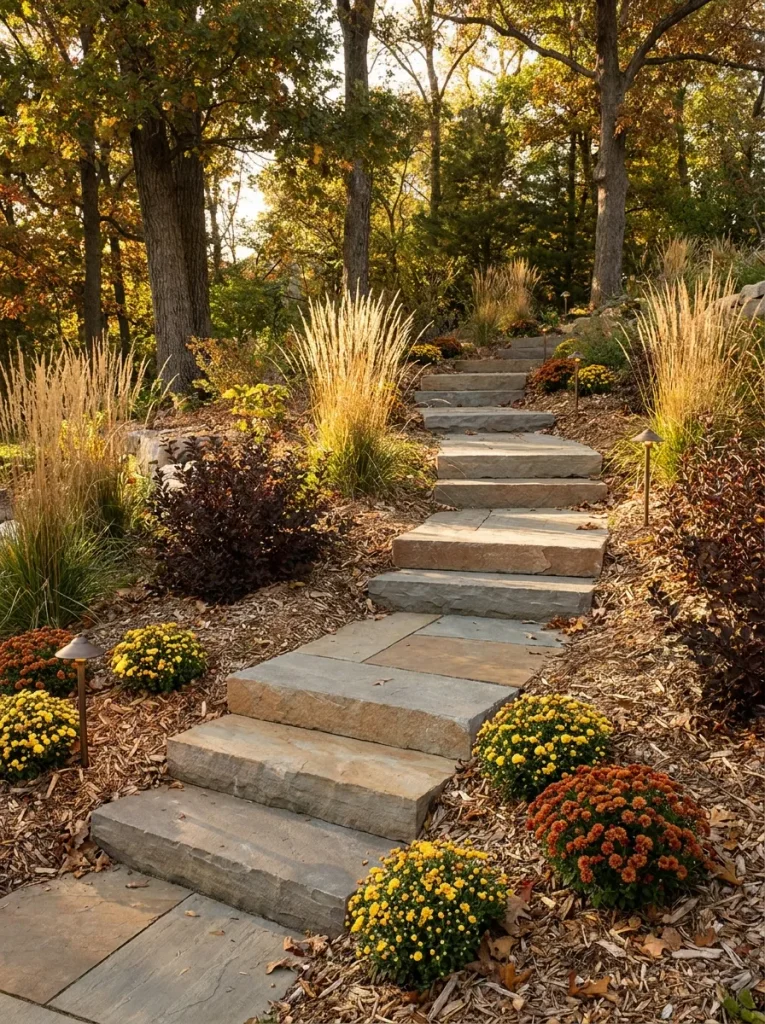
A few natural stone steps can completely change how an autumn garden feels, especially when the yard has a slope or different planting levels. Choose stones in warm gray, tan, or brown tones that complement existing paths and walls. Surround the steps with low-growing plants, ornamental grasses, and seasonal flowers so the hardscape feels integrated rather than added afterward. Keep foliage slightly back from each step to preserve a clear walking surface. This simple structure gives the garden stronger definition while making different areas easier to reach and visually connected.
For a more polished finish, repeat the stone material somewhere else in the yard, such as around a seating area or small retaining wall. Low pathway lights can highlight each step after sunset while adding a soft decorative glow. Avoid placing tall plants directly beside the walking line because they can make narrow steps feel cramped. In my experience, natural stone looks particularly beautiful in fall because its muted colors complement amber grasses, fallen leaves, and dark green foliage. The combination creates a timeless landscape that feels established rather than overly decorated.
8. Rustic Raised Beds
- Build raised beds from natural wood for a warm, structured garden layout.
- Fill them with late-season vegetables, herbs, or hardy flowers.
- Arrange beds in straight or geometric lines for visual order.
- Use gravel pathways to keep soil contained and walking areas clean.
- Add simple wooden supports or labels for practical garden organization.
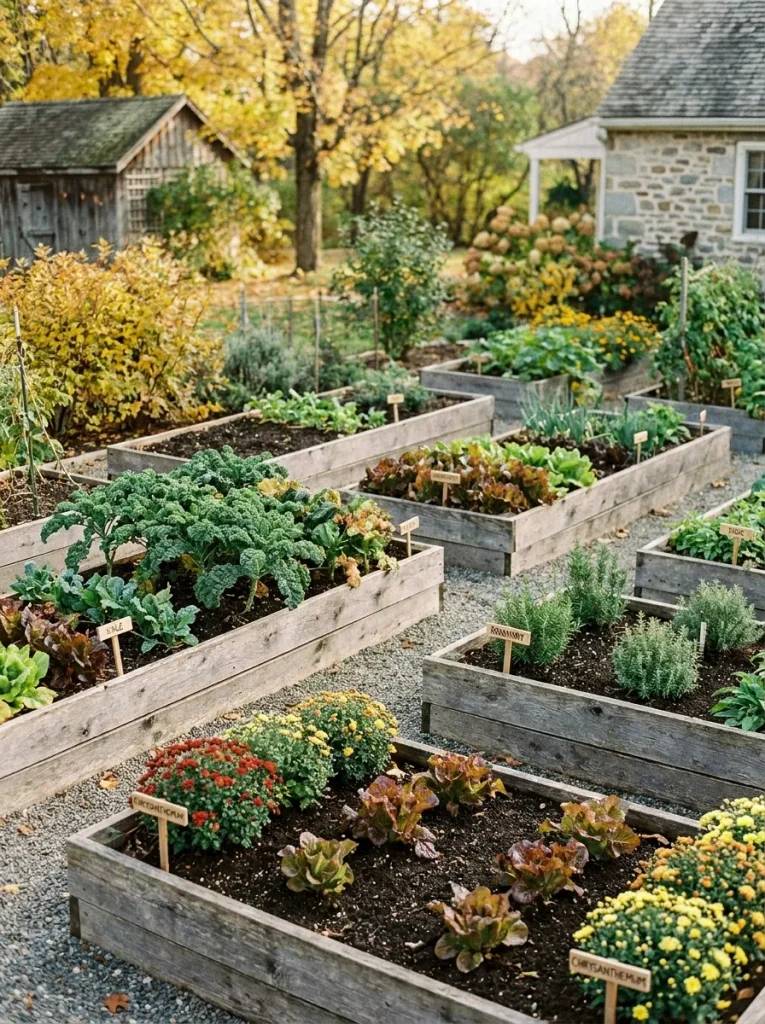
Raised beds bring structure to a garden while creating useful planting space for vegetables, herbs, and seasonal flowers. Weathered wood works beautifully with autumn landscapes because its warm brown tones complement golden foliage and fallen leaves. Arrange several beds in parallel lines or a simple geometric pattern to make the yard feel organized. Gravel paths between each bed prevent muddy footprints and give the planting area a cleaner appearance. Even a small garden can benefit from this layout because raised beds make individual planting zones easier to maintain, harvest, and refresh as seasons change.
Use the beds for cool-season crops or combine edible plants with ornamental flowers for a softer appearance. Leafy greens, herbs, and hardy blooms can provide varied textures while keeping the space productive. Leave enough room between beds for comfortable movement, watering, and harvesting. Wooden labels add a practical finishing touch without making the garden feel overly styled. I’ve noticed that repeating the same wood and gravel materials throughout a yard creates visual continuity, making functional growing areas feel like a deliberate part of the overall landscape.
9. Fall Flower Clusters
- Group seasonal flowers instead of scattering single plants throughout the yard.
- Combine chrysanthemums, asters, pansies, and ornamental grasses for varied texture.
- Repeat colors in several areas to create visual rhythm.
- Place taller flowers behind shorter varieties for a layered appearance.
- Remove faded blooms regularly to keep the display looking fresh.
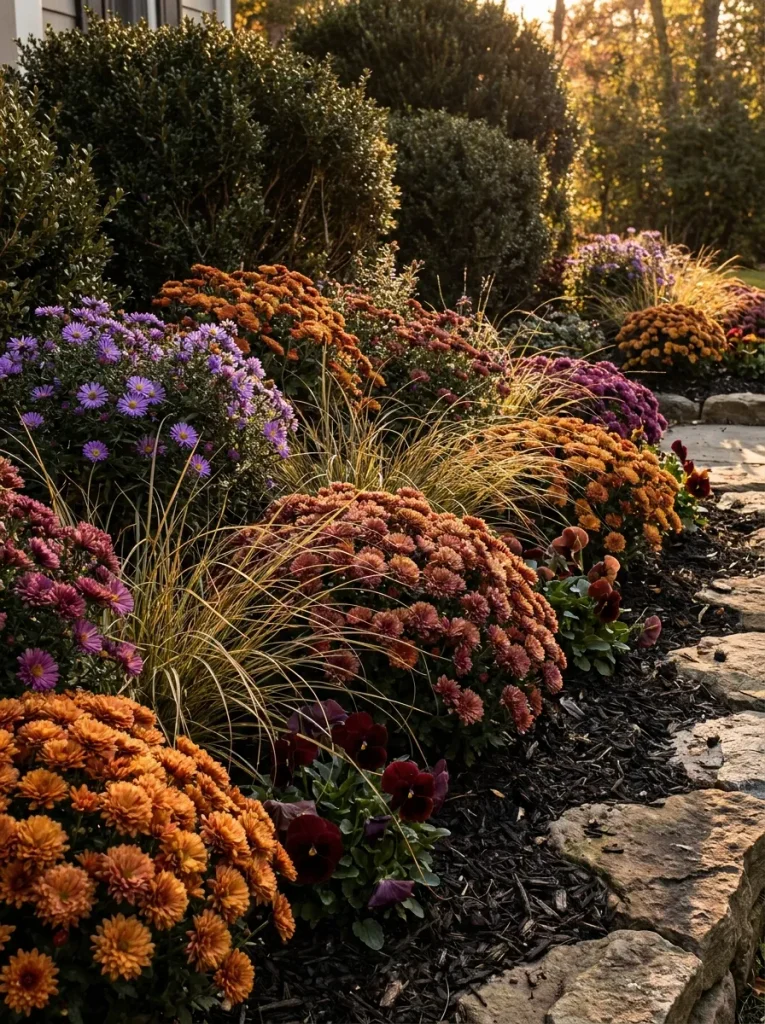
Clusters of seasonal flowers create a stronger visual impact than placing individual blooms randomly around the yard. Choose two or three complementary colors, then group chrysanthemums, asters, pansies, and ornamental grasses in generous sections. Taller plants should sit toward the back, while shorter flowers fill the front edge. This layered arrangement makes the planting bed look fuller and helps each color stand out. It also creates natural repetition, which is especially useful when you want a garden to look thoughtfully designed without relying on complicated landscaping techniques or expensive structural changes.
Repeat the same flower colors in another part of the yard to guide the eye naturally from one area to another. Deep purple, burgundy, golden yellow, and soft cream create a rich autumn palette without becoming too busy. Keep the surrounding mulch tidy and remove faded blooms when needed so the display remains fresh. That’s why many designers recommend planting in groups rather than isolated spots: larger blocks of color photograph beautifully and are easier to notice from a distance. The finished bed feels abundant, balanced, and unmistakably seasonal.
10. Wooden Garden Bench
- Place a simple wooden bench beneath a mature tree or beside a flower bed.
- Choose weathered timber for a naturally rustic autumn appearance.
- Add one weather-resistant cushion in rust, cream, or olive.
- Face the bench toward the most attractive garden feature.
- Leave enough surrounding space for comfortable movement and maintenance.
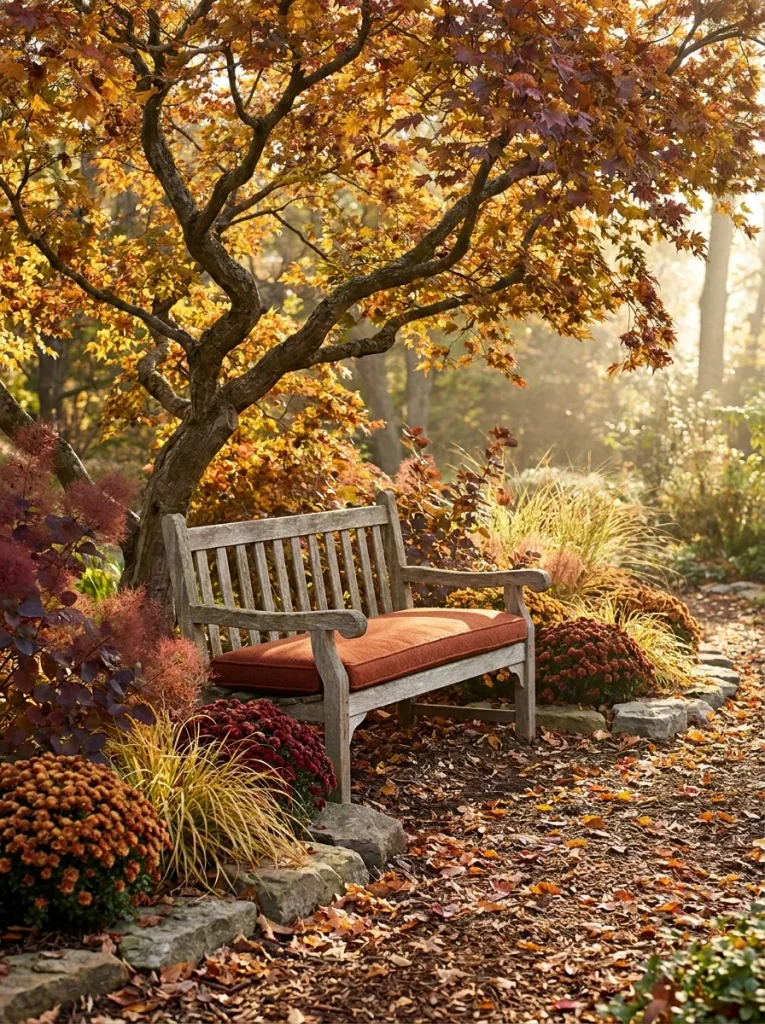
Sometimes the simplest garden addition creates the strongest sense of purpose, and a wooden bench is a perfect example. Place a sturdy bench beneath a mature tree, beside a flower bed, or at the end of a pathway where the garden opens into a wider view. Weathered timber naturally complements autumn colors, while a single rust, cream, or olive cushion adds comfort without making the space feel cluttered. Position the seat toward the prettiest planting area so it becomes a destination rather than simply another decorative object.
Surround the bench with low plants and leave enough clearance for easy access and routine garden care. A few fallen leaves can remain nearby for a relaxed seasonal look, but keep the seating surface clean and dry. If the bench sits on grass, consider adding a small stone or gravel base to prevent muddy feet during wet weather. In my experience, seating feels more inviting when it is slightly tucked into the landscape rather than placed in an exposed central position. This creates a peaceful viewing spot while strengthening the garden’s overall layout.
11. Lantern Garden Glow
- Use lanterns to add gentle illumination around paths, seating areas, and planting beds.
- Choose metal, wood, or weathered finishes that complement the landscape.
- Mix lantern heights to create depth after sunset.
- Use outdoor-rated lighting designed for the conditions in your area.
- Keep lights low and warm so they enhance rather than overpower the garden.
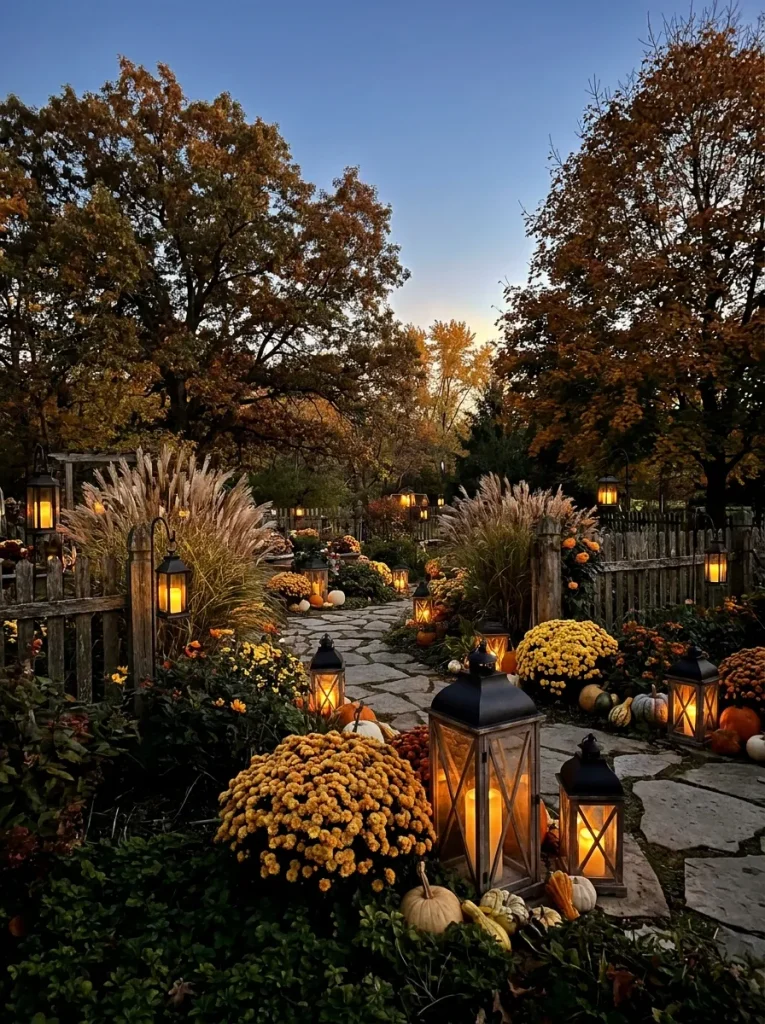
Warm lighting can make an autumn garden feel completely different once the sun goes down. Place lanterns along pathways, beside seating, or near clusters of seasonal flowers to create gentle pools of light rather than one harsh source. Choose weathered metal or wood finishes that blend naturally with the landscape. Vary the heights slightly so the lighting has visual depth, but avoid placing too many lanterns close together. The goal is to highlight important areas while preserving the darker spaces that make an outdoor garden feel calm and dimensional.
For safety and durability, select lighting specifically rated for outdoor conditions and follow the manufacturer’s placement instructions. Solar lanterns can work well in sunny locations, while low-voltage landscape lighting offers more consistent illumination where appropriate. Keep cables and fixtures away from walking paths and water accumulation. I’ve noticed that warm, low-level lighting photographs especially well because it emphasizes textures such as stone, bark, mulch, and foliage. The result is a garden that remains visually engaging after sunset without losing its natural autumn character.
12. Harvest Basket Display
- Use woven baskets to showcase pumpkins, gourds, dried foliage, or seasonal branches.
- Place displays near entrances, patios, or garden sheds for easy visibility.
- Combine natural tan fibers with muted orange and cream accents.
- Choose weather-resistant baskets or sheltered locations for longer-lasting displays.
- Keep arrangements loose so they feel collected rather than overly formal.
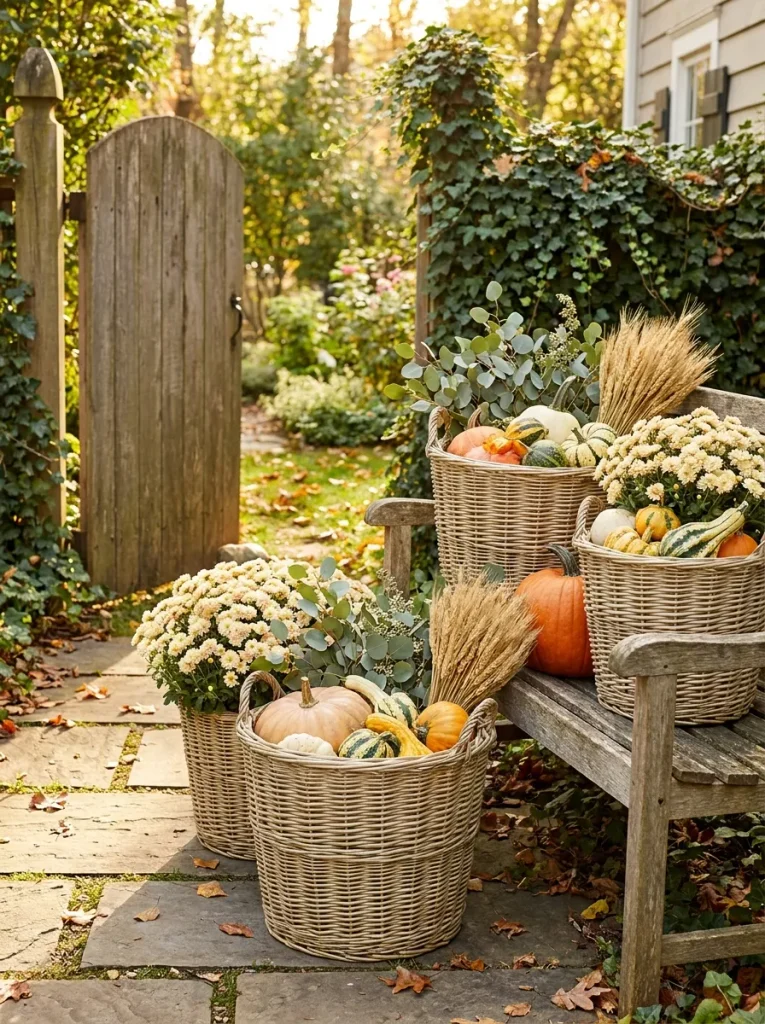
A woven harvest basket adds instant autumn character without requiring a permanent landscaping change. Fill a large basket with pumpkins, gourds, dried grasses, wheat stems, or seasonal branches, then place it beside a garden entrance, patio, or shed. Natural tan fibers pair beautifully with muted orange, cream, olive, and brown tones. Keep the arrangement loose and slightly asymmetrical so it looks gathered from the garden rather than carefully manufactured. One generous basket can fill an empty corner while adding texture that complements surrounding plants and hardscape.
For longer-lasting displays, choose sturdy outdoor baskets or position them beneath a covered area where they receive less direct rain. Layer larger pumpkins or gourds at the bottom and allow taller stems to rise behind them, creating height without overwhelming the container. Repeat a few materials elsewhere in the yard, such as dried grasses near a pathway or matching pumpkins beside a bench. This creates subtle continuity. The finished display feels warm and seasonal while remaining easy to refresh when individual flowers, foliage, or decorative pieces begin to fade.
13. Leafy Garden Arch
- Frame a pathway or entrance with a simple wooden or metal garden arch.
- Train climbing plants across the structure for added height and privacy.
- Combine green foliage with burgundy or golden seasonal accents.
- Keep the pathway underneath open and easy to navigate.
- Add small lanterns nearby to emphasize the vertical structure after dark.
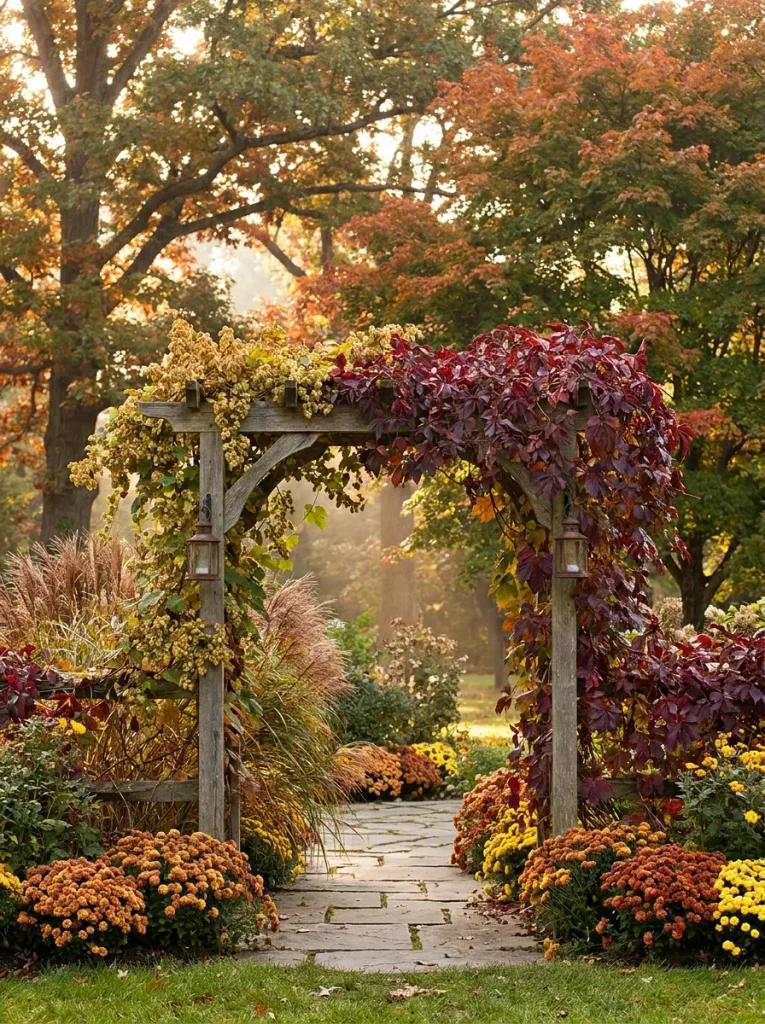
A garden arch can turn an ordinary walkway into a memorable entrance with very little ground space. Choose a simple wood or metal structure and position it at the beginning of a path, between garden zones, or near a seating area. Climbing foliage adds vertical interest while seasonal plants around the base provide autumn color. Burgundy leaves, golden grasses, and cream flowers create contrast without competing with the arch itself. This is especially useful in smaller yards because the design draws the eye upward instead of requiring a large planting footprint.
Keep the pathway underneath the arch open and wide enough for comfortable movement, especially if the entrance receives frequent foot traffic. Train suitable climbing plants gradually so they remain secure and do not overwhelm the structure. A pair of low lanterns can emphasize the arch after sunset while adding practical pathway illumination. In my experience, repeating the arch’s material elsewhere, such as through a wooden bench or fence detail, helps the whole garden feel connected. The result is a strong vertical focal point that makes the landscape feel more layered.
14. Mulched Flower Beds
- Use a fresh layer of mulch to give seasonal planting beds a clean foundation.
- Choose natural brown, dark, or warm-toned mulch for autumn contrast.
- Group flowers and grasses in visible layers above the mulch.
- Keep mulch away from direct contact with plant stems and tree trunks.
- Refresh thin areas rather than automatically adding excessive material.
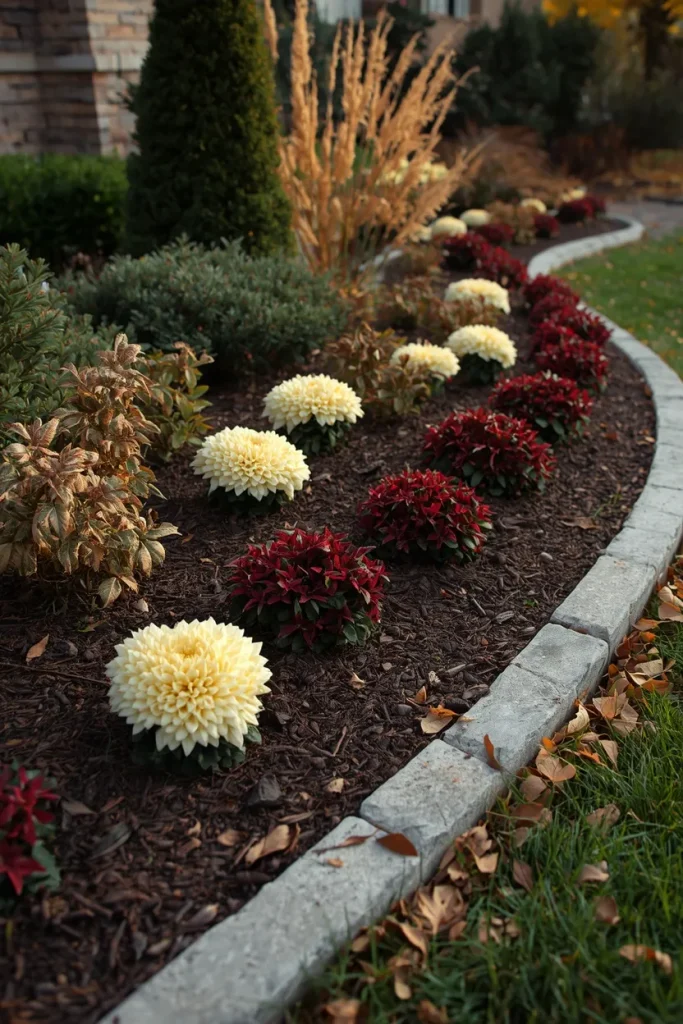
Fresh mulch can make an autumn garden look noticeably tidier while giving seasonal plants a strong visual backdrop. Dark brown or natural-toned mulch contrasts beautifully with cream chrysanthemums, burgundy flowers, golden grasses, and deep green shrubs. Spread it evenly across planting beds while leaving appropriate space around plant stems and tree trunks. The darker surface also helps define the boundary between lawn, flowers, and pathways. This simple update is particularly useful when summer growth has left garden beds looking uneven or tired, because it immediately creates a more finished appearance.
Mulch also serves practical purposes beyond appearance, including helping moderate soil moisture and reducing the amount of exposed soil that can become muddy. Choose a suitable material for your plants and local conditions, then refresh only areas that need it. Avoid creating thick piles around trunks or stems, since excessive moisture can cause problems. That’s why a clean, moderate layer often works better than simply adding more. Paired with carefully grouped seasonal plants, the result is a polished garden bed that feels intentional while remaining straightforward to maintain.
15. Cozy Garden Pergola
- Define an outdoor living zone with a compact wooden pergola.
- Add weather-resistant seating beneath the structure for autumn gatherings.
- Hang simple lanterns or warm outdoor lights from the beams.
- Use climbing foliage to soften the wood and add natural texture.
- Keep the surrounding planting low enough to preserve an open, airy feel.
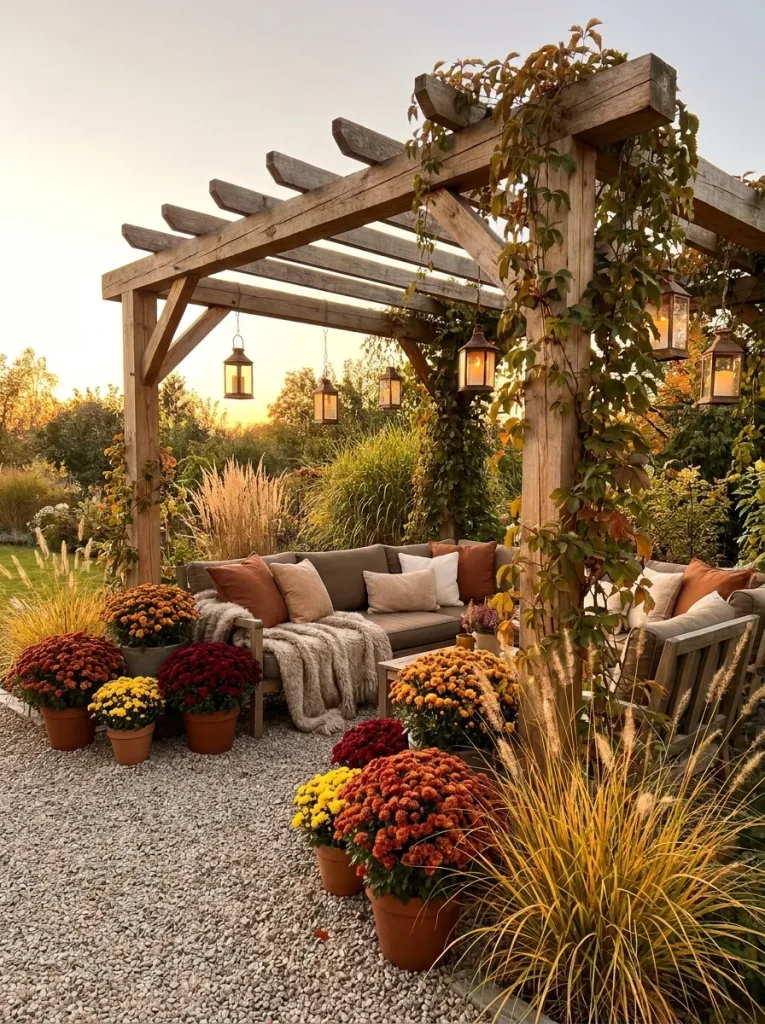
A pergola gives an autumn garden a defined outdoor room without requiring a full enclosed structure. Choose a compact wooden design and position it over a patio, gravel seating area, or transition between garden zones. Beneath it, add weather-resistant chairs or a small sofa with cushions in rust, cream, olive, or warm brown. The overhead beams naturally frame the seating while creating a stronger sense of architecture. This setup works particularly well when an open yard feels visually flat because the pergola introduces height, structure, and a clear destination.
Keep the surrounding plants lower near the seating area so the space remains open and comfortable. Climbing greenery can soften the wooden frame, while hanging lanterns or outdoor-rated lights create a warm evening atmosphere. Add a few seasonal containers around the perimeter rather than filling every corner with décor. I’ve noticed that restraint makes pergola spaces feel more sophisticated because the structure itself becomes the focal point. With thoughtful planting and comfortable seating, the area can support morning coffee, casual gatherings, or peaceful autumn evenings outdoors.
16. Autumn Window Boxes
- Dress garden-facing windows with seasonal flowers and trailing foliage.
- Combine chrysanthemums, pansies, ornamental kale, and ivy for varied texture.
- Choose planters in wood, charcoal, or terracotta finishes.
- Repeat colors from nearby flower beds for a connected look.
- Check drainage regularly to protect plants and the building exterior.
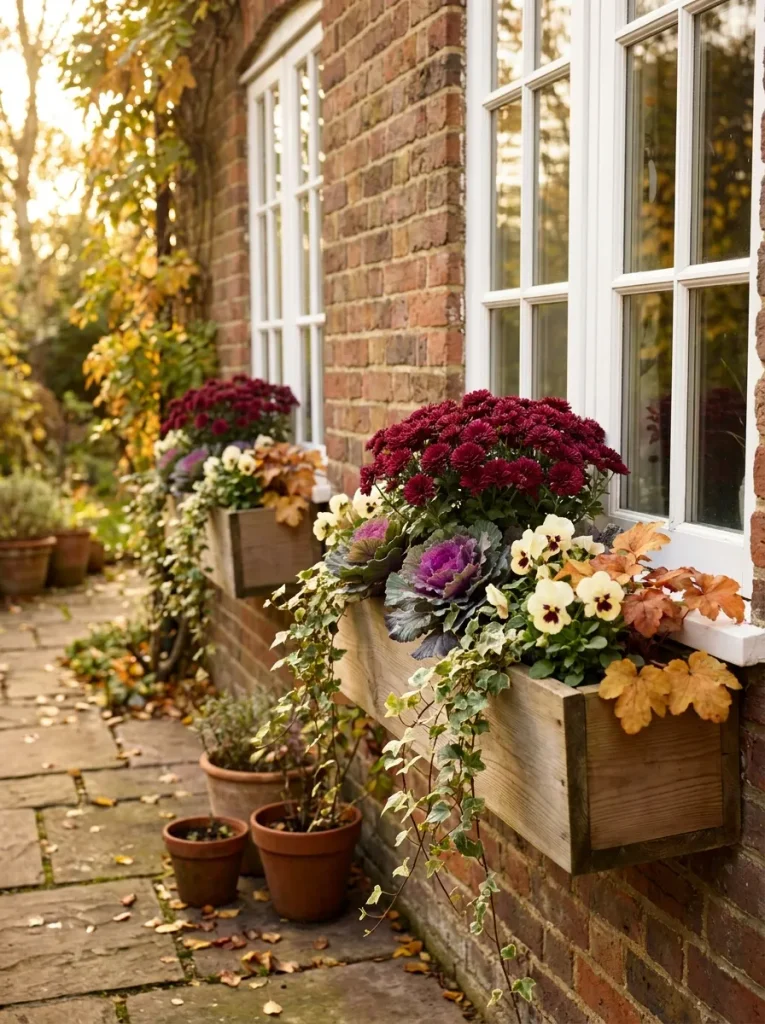
Autumn window boxes bring seasonal color upward, making even a small garden feel fuller and more layered. Fill sturdy planters with chrysanthemums, pansies, ornamental kale, ivy, or other plants suited to your local conditions. Combine upright flowers with trailing foliage so the arrangement has height and movement. Wooden, charcoal, or terracotta containers work especially well with fall landscapes because their earthy finishes complement pumpkins, stone, and natural wood. Position the boxes beneath windows that overlook the garden so the seasonal display can be enjoyed from both indoors and outside.
Choose plants with similar light and watering needs, and make sure every container has proper drainage. Repeat one or two colors from nearby beds to create visual continuity rather than making the window boxes look disconnected. Keep the arrangement full but leave enough space for plants to grow. Regularly remove faded flowers and check moisture levels, especially during changing autumn weather. A well-maintained window box adds vertical color, softens exterior walls, and creates a charming transition between the home and garden without requiring major landscaping work.
17. Rustic Garden Fence
- Use a simple wooden fence to define the garden without making it feel enclosed.
- Choose weathered or natural timber for an authentic autumn backdrop.
- Plant grasses, vines, or shrubs along the fence line for softness.
- Add small hanging planters for extra seasonal color.
- Keep the fence height appropriate for privacy, sunlight, and local regulations.
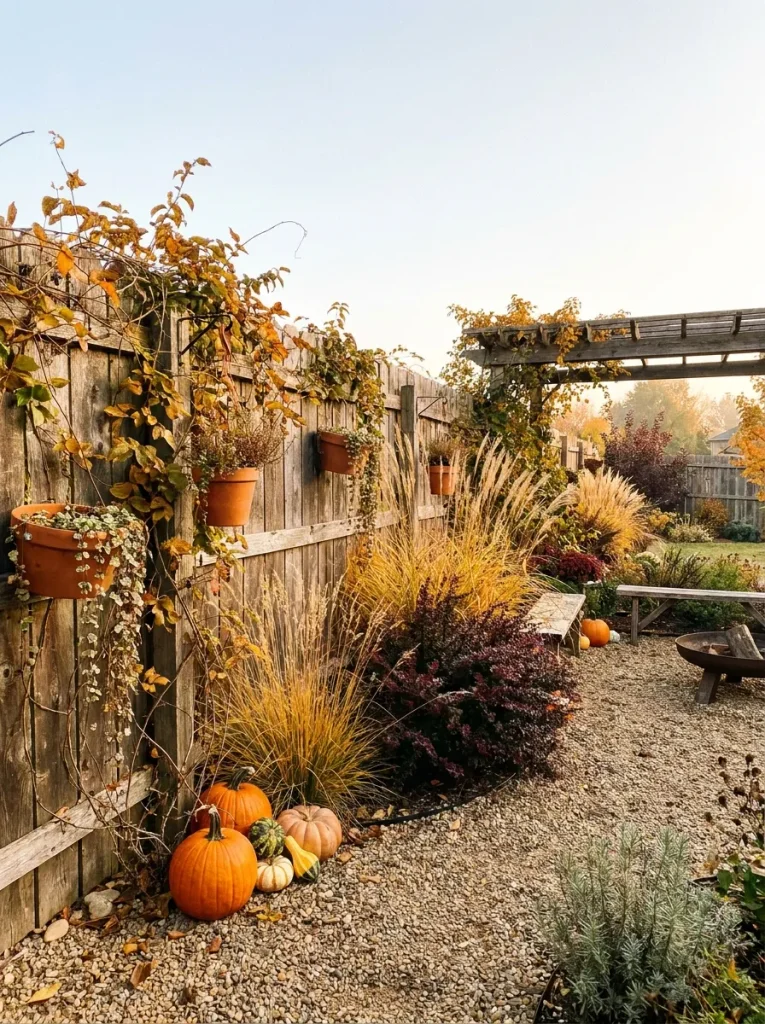
A rustic wooden fence can give an autumn yard a stronger sense of structure while creating a beautiful backdrop for seasonal planting. Choose natural or weathered timber that works with existing garden materials, then soften the fence line with ornamental grasses, shrubs, or climbing vines. The combination of vertical boards and layered greenery makes the landscape feel deeper without requiring a large amount of space. This approach is especially useful when a yard looks unfinished around its edges or when you want to visually separate a planting area from a patio or lawn.
Avoid filling the entire fence line with identical plants, which can make the border feel heavy. Instead, repeat a few species at intervals and leave small open spaces for hanging planters or seasonal accents. Terracotta pots, simple lanterns, or a few pumpkins can add warmth without overwhelming the natural timber. In my experience, a fence looks more integrated when plants are allowed to overlap its lower edge slightly. The result is a relaxed garden boundary that provides definition, texture, and a distinctly autumn-ready setting.
18. Woodland Planting
- Create a naturalistic garden corner with shade-loving plants and layered foliage.
- Combine ferns, hostas, heuchera, moss, and suitable native plants.
- Use fallen leaves selectively to preserve a woodland-inspired appearance.
- Add natural stones or logs for texture and structure.
- Keep the planting informal rather than arranging every plant in straight lines.
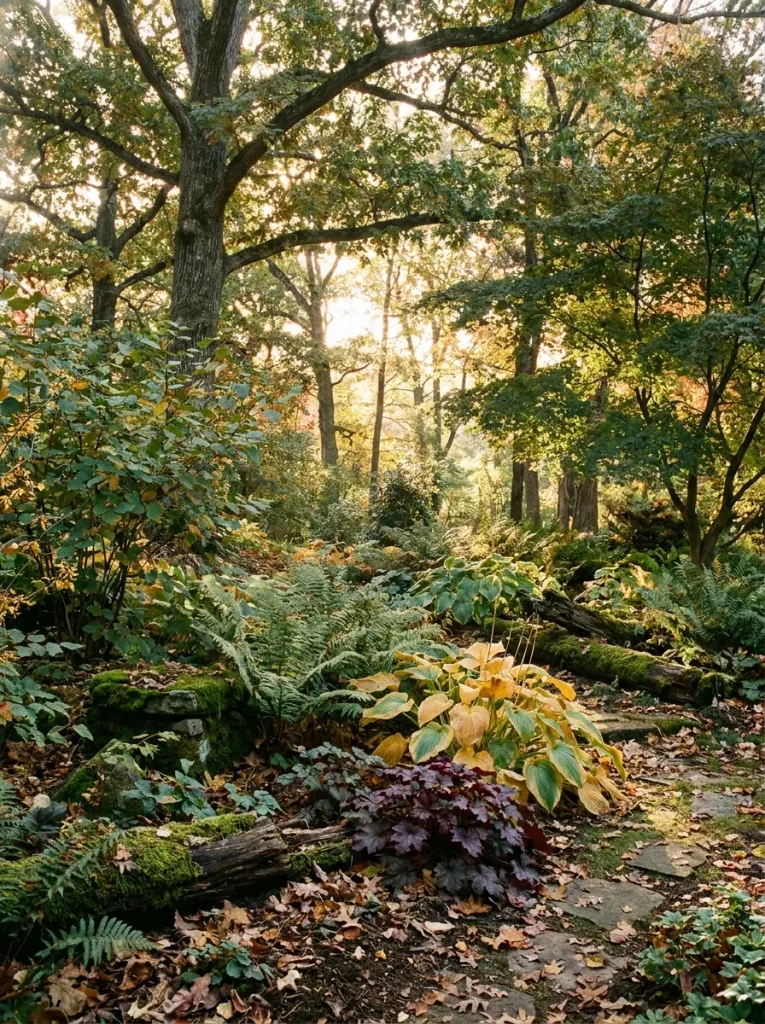
A shaded corner can become one of the most beautiful parts of an autumn landscape when you work with the existing conditions instead of fighting them. Build a woodland-inspired planting area beneath mature trees using suitable shade-loving plants such as ferns, hostas, heuchera, moss, and locally appropriate natives. Layer plants at different heights so the space feels naturally established. Add a few stones or weathered logs to introduce texture, but avoid making the arrangement too symmetrical. The goal is a relaxed composition that looks as though it naturally belongs beneath the tree canopy.
Let some fallen leaves remain where they are appropriate, especially around established woodland-style plants, while keeping paths and drainage areas clear. Filtered sunlight can create beautiful highlights across green, burgundy, gold, and brown foliage during autumn. Before planting beneath trees, consider root competition, moisture levels, and the specific light conditions throughout the day. Naturalistic planting can be both attractive and practical when chosen carefully. The finished corner provides a quieter contrast to brightly decorated areas and gives the entire yard more depth and seasonal variety.
19. Cozy Garden Lighting
- Layer low-level lights around paths, beds, and seating areas.
- Use warm white bulbs to complement autumn foliage.
- Highlight trees, textured walls, or architectural features with subtle uplighting.
- Keep brighter fixtures away from relaxing seating zones.
- Choose outdoor-rated fixtures suitable for your climate and garden conditions.
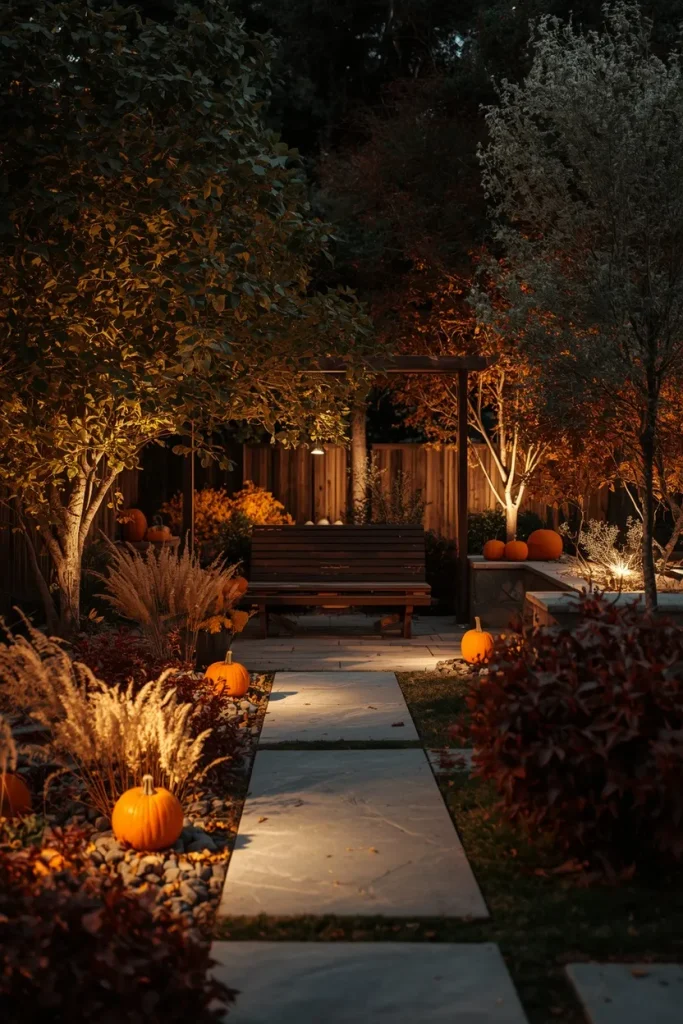
Thoughtful lighting can make an autumn garden feel inviting long after daylight disappears. Instead of relying on one bright fixture, layer several low-level lights around paths, planting beds, trees, and seating areas. Warm white illumination works particularly well with golden grasses, burgundy foliage, pumpkins, and natural wood. Use subtle uplighting to emphasize attractive tree trunks or architectural features, while smaller path lights help guide movement. This layered approach creates depth and keeps the garden visually interesting without making the entire yard feel brightly illuminated or overly formal.
Think about how the garden is actually used before deciding where lights should go. A seating area needs softer illumination, while steps and pathways require practical visibility. Keep cables and fixtures positioned safely and use outdoor-rated products designed for the conditions where they will be installed. In my experience, lighting looks most sophisticated when some areas remain darker, allowing illuminated features to stand out naturally. The finished yard feels warmer and more dimensional, giving seasonal planting, stonework, and outdoor furniture a beautiful evening presence.
20. Autumn Garden Focal Point
- Choose one standout feature to anchor the seasonal landscape.
- Combine pumpkins, flowers, grasses, and natural materials around the focal area.
- Place the display where it can be seen from the house or main pathway.
- Keep the surrounding décor restrained so the central feature remains noticeable.
- Refresh individual elements as flowers fade or weather changes.
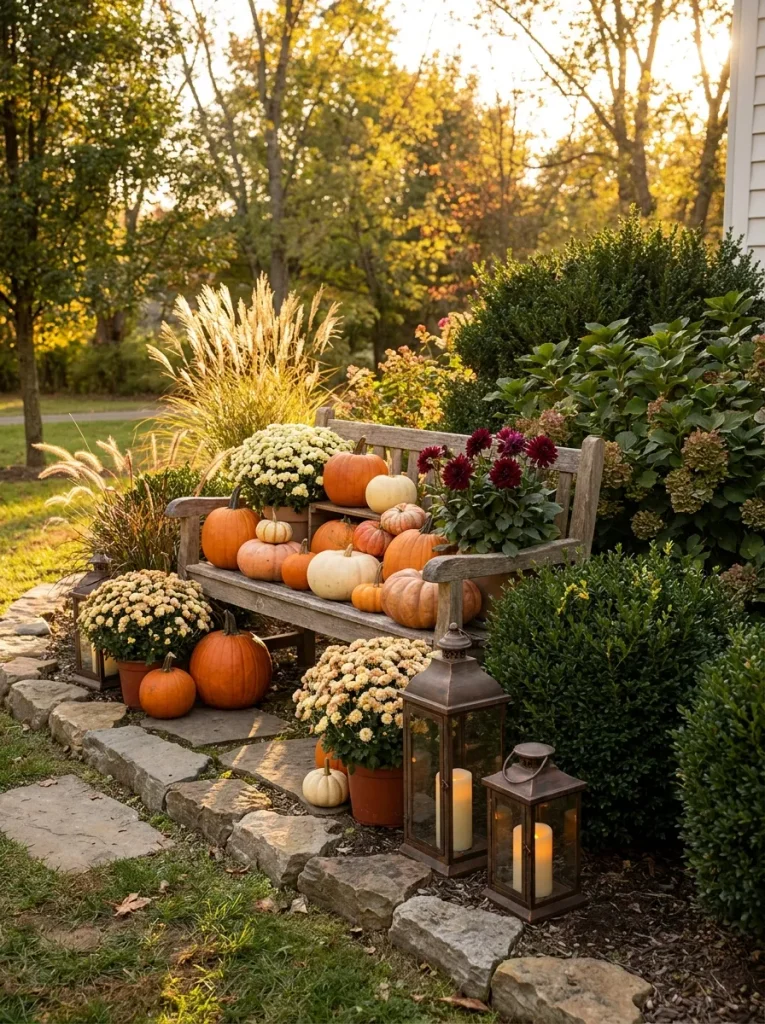
Every garden benefits from one feature that immediately catches the eye, and autumn is the perfect season to create one. Choose a visible location near a doorway, main path, patio, or window, then build the display around a single strong element such as a bench, large planter, tree, or seasonal flower bed. Layer pumpkins, chrysanthemums, ornamental grasses, lanterns, and natural stone around it without covering every available surface. The goal is a clear visual anchor that gives the rest of the landscape direction while keeping the overall arrangement relaxed and usable.
The strongest Fall Garden Ideas usually balance decoration with the existing landscape rather than competing against it. Repeat a few colors from other areas of the yard, then allow the focal point to have slightly more detail or height. Keep pathways open and choose weather-resistant materials so the display remains practical through changing autumn conditions. As flowers fade, replace individual containers or seasonal accents instead of rebuilding everything. This makes the focal area easier to maintain and keeps it looking fresh. The finished garden feels cohesive, welcoming, and thoughtfully designed from every viewing angle.
Conclusion
A cozy autumn yard is often created through small, thoughtful changes rather than a complete landscape makeover. From seasonal containers and flower clusters to rustic seating, warm lighting, and natural stone accents, these Fall Garden Ideas can add color, texture, structure, and personality to your outdoor space. I’ve seen how a few simple updates can completely change the way a garden feels and functions. Choose one idea that fits your space, then build from there. Save this article to Pinterest for your next seasonal refresh, try your favorite ideas, and share it with someone who loves creating a beautiful autumn garden.